
Field Note
Southwest Wind Week Fishing Plan for Northeast Anglers
A Northeast saltwater plan for persistent southwest winds: where to fish, when to use protected water, and how to adjust for stripers, fluke, and sea bass.
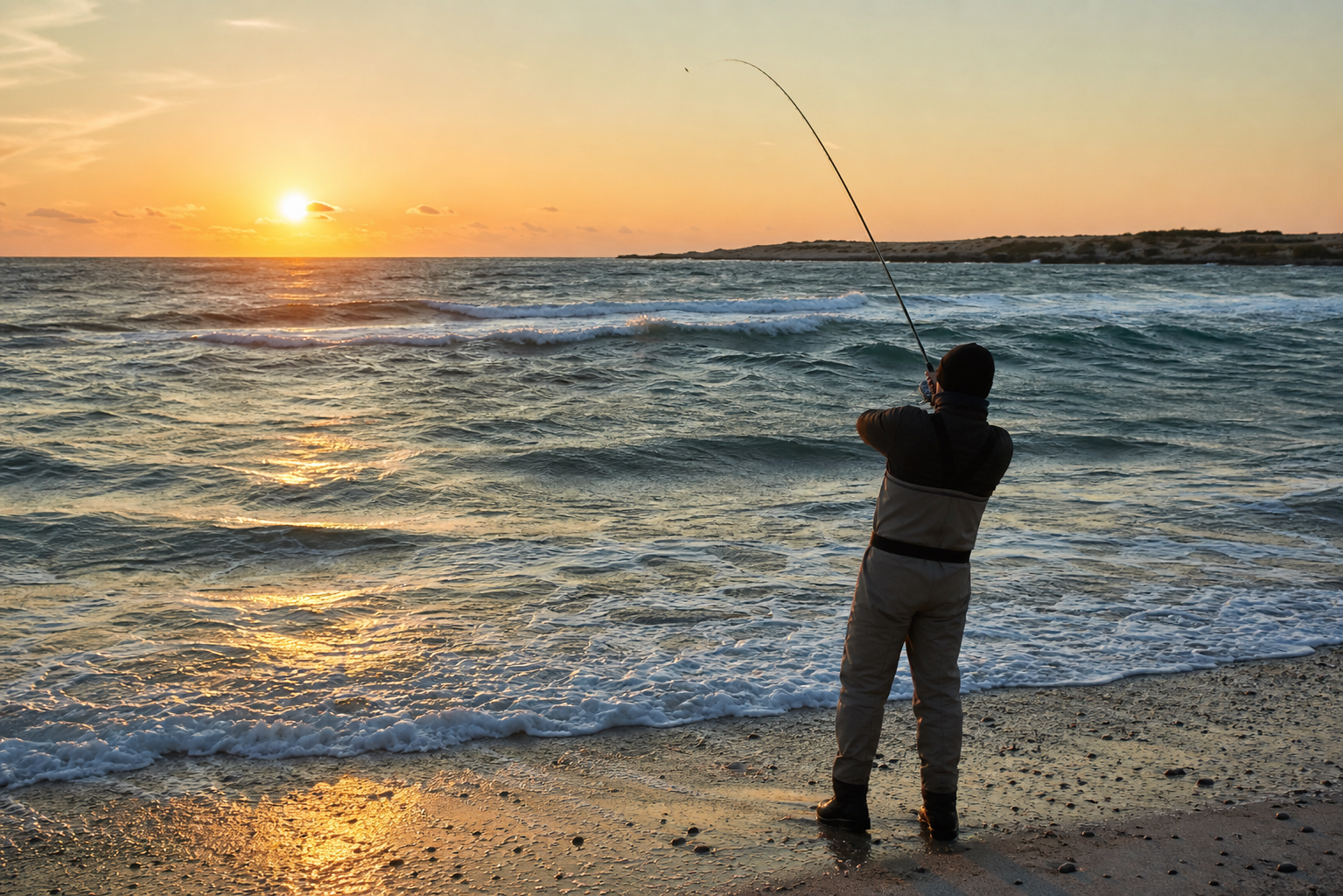
The quick take
A southwest wind is one of the most important summer patterns for Northeast saltwater anglers because it can make one shoreline feel fishy, another shoreline feel unfishable, and a nearby bay or sound fish like a different day entirely.
For the final day of June and the start of the holiday week, the official marine signal is clear enough to plan around. The National Weather Service New York coastal waters forecast issued June 30 called for southwest flow around the Long Island and Connecticut waters, including gusts in the 20- to 30-knot range in some periods and ocean seas building into the mid-week window. The Boston/Norton coastal waters forecast described a Bermuda high, persistent southwest flow for the work week, rising humidity, and a period of 3- to 6-foot seas across southern waters Wednesday into Thursday.
That does not mean every angler should stay home. It means the smartest trip this week is probably not the most exposed one.
Field rule: when the southwest wind becomes the story, stop asking only "where are they biting?" Ask "which side of this coastline gives me clean water, safe footing, and enough tide to make a presentation?"
Why southwest wind changes the Northeast fishing map
From New Jersey to Long Island, Connecticut, Rhode Island, Cape Cod, and the Islands, a summer southwest wind is not just “wind from the left” or “wind in your face.” It changes drift speed, water color, bait position, surf sweep, inlet safety, and how much useful fishing time you actually get.
A few practical effects show up quickly:
- Ocean beaches can build sweep and short-period chop. Even moderate seas can become tiring when the wind and current push your line sideways.
- South-facing shores often get more exposed. That can mean dirty water, harder casting, and more dangerous wading or jetty conditions.
- North shores, back bays, harbors, and lee shorelines may become the better plan. Protection can matter more than the latest catch photo.
- Boat drifts speed up. Fluke rigs, bucktails, and sea bass jigs need more weight, better angle control, or a move to water where the wind and tide are not fighting you.
- Heat and humidity matter. The Boston/Norton forecast specifically mentioned rising humidity with the persistent southwest flow, which makes early starts, hydration, and sun coverage part of the fishing plan.
This is exactly the kind of pattern where a good angler can save the trip by changing the target instead of forcing the original idea.
Surfcasters: pick the lee, the low light, or the current edge
If you are surfcasting this week, build the trip around three questions before you pick plugs:
- Is the beach, inlet, breachway, or jetty safe under the actual wind and swell?
- Will the wind help my presentation, ruin it, or make it unsafe?
- Is there enough tide movement to make bait vulnerable without forcing me into bad footing?
When the oceanfront is worth fishing
An exposed oceanfront can still be worthwhile if the water is clean enough and the sweep is manageable. A southwest wind may push bait, make whitewater, and put striped bass or bluefish in a feeding mood around points, cuts, inlets, and outer bars. But the difference between “good whitewater” and “not worth it” can be thin.
For stripers, prioritize:
- Dawn, dusk, and night windows.
- Current seams at inlets, points, and breachways.
- Cooler water or stronger flow, especially toward the East End, Rhode Island breachways, Cape Cod edges, and similar high-current spots.
- Lures that hold the water: bucktails, darters, bottle plugs, needlefish, metal lips, and soft plastics with enough head weight to stay connected.
For bluefish, do not overthink it. If birds, bait, or surface commotion show up, carry durable metals, pencils, poppers, and single-hook options where legal and practical. Bluefish can turn a windy grind into an action tide fast.
When the better move is protected water
If the oceanfront looks angry, dirty, or unsafe, shift rather than quit. Protected water can be the difference between a skunk and a useful session.
Look for:
- North-facing beaches when south-facing beaches are taking the full push.
- Back-bay sod edges and creek mouths with moving water.
- Harbor mouths where bait has to pass through a narrow lane.
- Sound-side structure, docks, rock piles, and channel edges.
- Public piers, bulkheads, and family-friendly access where the goal is action rather than hero surf.
This is especially useful for anglers bringing kids or newer anglers. A protected porgy, snapper blue, schoolie bass, or short-fluke session is more valuable than standing on an exposed beach while everyone gets sandblasted.
Boat anglers: make drift control the first decision
For boat anglers, southwest wind week is a drift-control problem before it is a tackle problem.
Fluke fishing can improve when wind and tide line up enough to move baits naturally along channels, reef edges, sand lanes, and bay-mouth drops. It gets frustrating when the boat races, slides sideways, or loses bottom contact every few seconds. Black sea bass can tolerate a little mess if you can hold near structure, but anchoring, spot-locking, or repeatedly resetting in wind-against-tide conditions can become the whole trip.
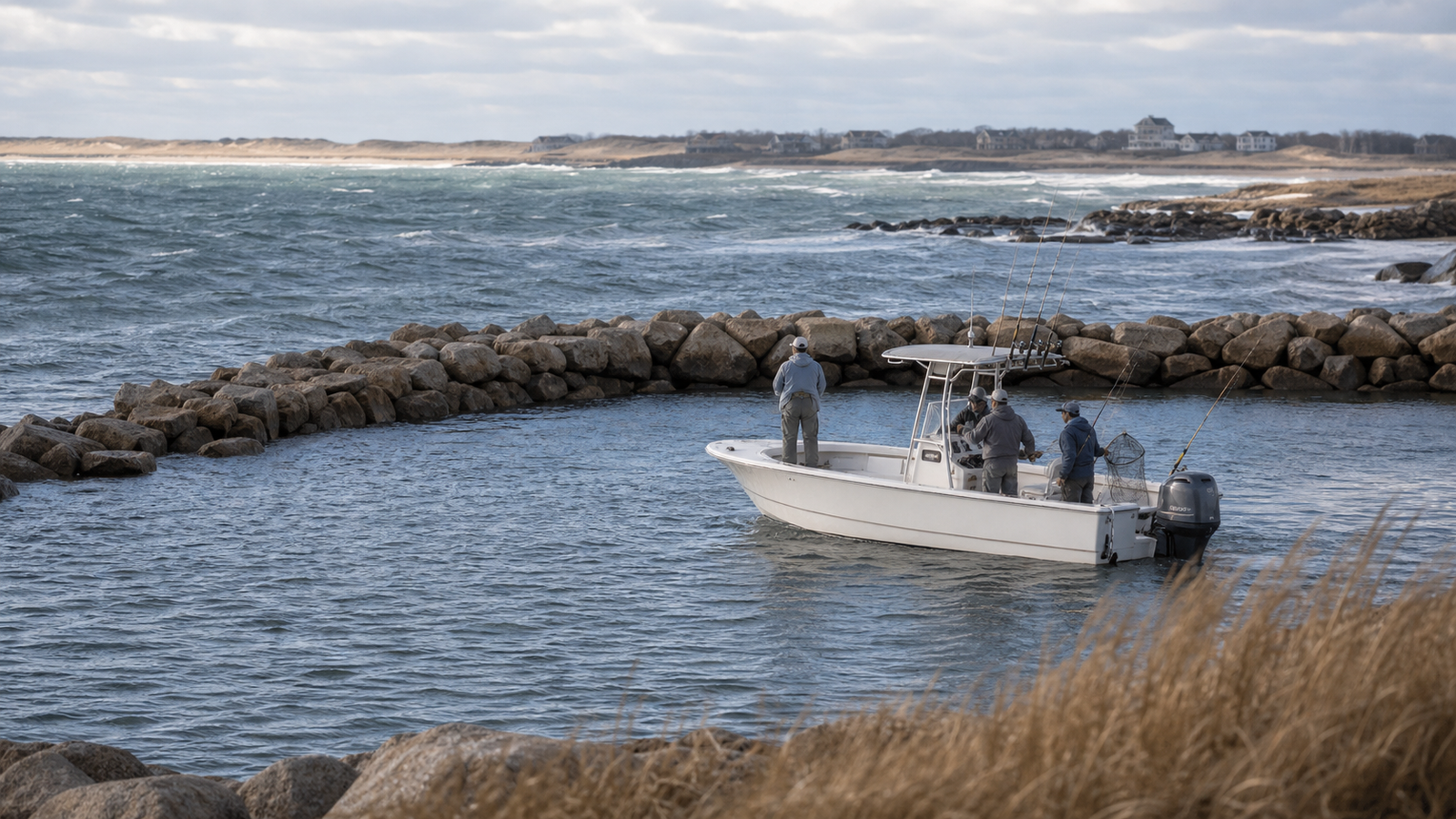
Fluke adjustments for a southwest blow
Try this order before you abandon a fluke plan:
- Start shallower or more protected. Inside channels, bay-mouth edges, and lee shorelines may give you better bottom contact than a famous open-water number.
- Match bucktail weight to drift, not ego. If you cannot feel bottom, go heavier, change angle, or move.
- Use shorter drops and controlled scopes. Too much line in the water becomes a sail.
- Repeat the small good lane. If one 200-yard drift produces contact, bait, or a keeper, tighten the loop rather than wandering.
- Have a porgy or sea bass fallback where legal. A reef, rock pile, dock, or deeper structure piece can save the day when fluke drift control is poor.
Sea bass and structure in sloppy conditions
Black sea bass reward precision. If the boat is sliding off structure too quickly, the best lure in the world will not matter. Choose smaller, more protected structure first. If you fish reefs or wrecks, keep the crew organized before the drop: rigs ready, weight chosen, net clear, and a reset plan agreed on.
The safest plan is not always the shortest run on the chart. It is the run that leaves margin for the afternoon wind, thunderstorms, fog, fuel, crew comfort, and the ride home.
A practical tide-window plan for this week
Use NOAA tide predictions and your local marine forecast together, not separately. Tide tells you when water moves. The marine forecast tells you whether that water movement will be fishable, safe, or miserable.
If you have only 90 minutes
Pick the easiest safe access and fish the strongest part of the moving water:
- Surf: one inlet shoulder, point, breachway, or beach cut at dawn, dusk, or after dark.
- Bay: one sod bank, creek mouth, dock line, or channel edge.
- Boat: one controlled drift lane, not a marathon run.
- Family trip: one pier, dock, bulkhead, or protected beach with small hooks, bait, and a simple goal.
If you have a half day
Build a two-step plan:
- Fish the best tide at the higher-upside spot.
- Move to the protected fallback before the wind, heat, boat traffic, or thunderstorm risk makes the decision for you.
That sequence is more useful than gambling the whole trip on an exposed forecast. A smart fallback is not a sign of weakness. It is how summer anglers fish more and complain less.
Gear that earns space in a southwest-wind kit
You do not need a new closet of tackle for this pattern. You need a kit that holds bottom, handles spray, and lets you change plans fast.
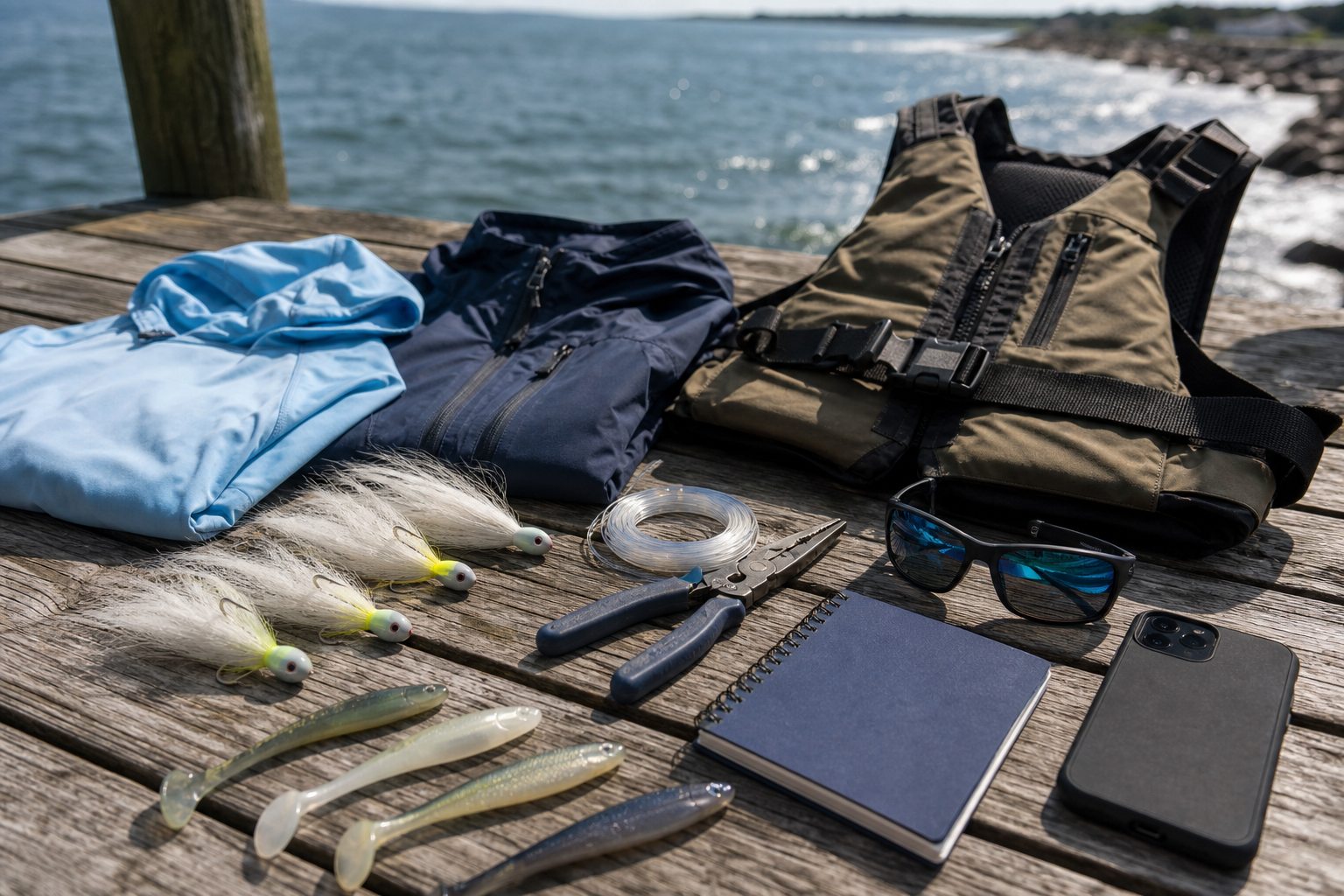
Surf kit
- Bucktails in several weights.
- Soft plastics and jig heads that can punch wind.
- Needles, darters, bottle plugs, and metals that hold in sweep.
- A leader wallet, pliers, plug bag drainage, and a headlamp for low-light windows.
- Footwear and traction appropriate to the access; do not treat slick rocks like sand.
Boat kit
- Heavier bucktails and sinkers than a calm-day box.
- A drift sock or trolling-motor plan if your boat is set up for it.
- PFDs worn or immediately ready, not buried.
- Rain shell, sun shirt, sunglasses, hat, and water.
- A short-run backup list: harbor edge, reef, dock line, or protected channel.
Family and shore-action kit
- Small hooks, bait rigs, snapper/bluefish metals, and dehooking tools.
- Cooler water, snacks, shade, and a realistic time limit.
- A public access choice with bathrooms or an easy exit when possible.
- A rule-check habit before keeping anything.
Safety is part of the bite window
NOAA rip-current guidance is blunt about one point anglers should respect: good beach weather does not automatically mean safe water. Rip currents can form even on calm, sunny days, and wind-driven surf adds another layer of risk for surfcasters, swimmers, and families on the same beach.
For this week, make these checks routine:
- Read the latest local marine forecast before leaving and again before launching or walking out.
- Check tide predictions for the exact area, not a generic region.
- Watch for thunderstorms and fog, especially when humid southwest flow is in place.
- Avoid wading deeper just to gain casting distance.
- Do not fish jetties, breachways, or inlet rocks alone when sweep and swell are building.
- For boats, leave enough margin for the ride home; a fair morning can become an ugly afternoon.
Internal links worth opening before you go
- Use the Northeast Fishing Trip Planner to organize tide, weather, and report checks.
- If you are fishing Long Island, start with the Long Island Fishing Guide before choosing surf, bay, inlet, or boat water.
- For the holiday period, pair this with the Fourth of July Northeast Fishing Playbook.
- For bottom-fishing decisions, read the July fluke and black sea bass structure plan.
- For packing, compare your kit against the Northeast coastal fishing gear checklist.
The bottom line
The best Northeast anglers do not treat southwest wind as an excuse. They treat it as a filter.
If the exposed beach is safe, clean, and full of moving water, fish it hard in low light. If the boat drift is controlled, work the fluke and sea bass structure with discipline. If the ocean is sloppy, shift to the Sound, bay, harbor, pier, dock, or lee shoreline and keep the trip alive.
The fish do not care what plan you made last night. This week, let the wind, tide, and safety margin choose the water before you choose the lure.
Before the next tide
Build the trip around wind, tide, and a fallback.
Open the SteveFraney.com trip planner, check the latest marine forecast and tide station, then pick one high-upside spot and one protected backup before you leave.
Sources consulted
- National Weather Service New York, Coastal Waters Forecast for Montauk Point NY to Sandy Hook NJ, Long Island Sound, Long Island Bays, and New York Harbor, issued June 30, 2026.
- National Weather Service Boston/Norton, Coastal Waters Forecast for Massachusetts and Rhode Island coastal waters, issued June 30, 2026.
- NOAA Center for Operational Oceanographic Products and Services, Tides & Currents station selection and tide-prediction resources.
- NOAA/National Weather Service rip-current safety guidance.
- On The Water, Long Island and NYC Fishing Report, June 25, 2026, consulted for late-June regional fishing context.