
Field Note
Northeast Coastal Fishing Gear Checklist
A starter checklist for Northeast coastal anglers planning around surf, boat days, sun, rain, cold mornings, and changing weather.
Updated June 12, 2026
Start with conditions
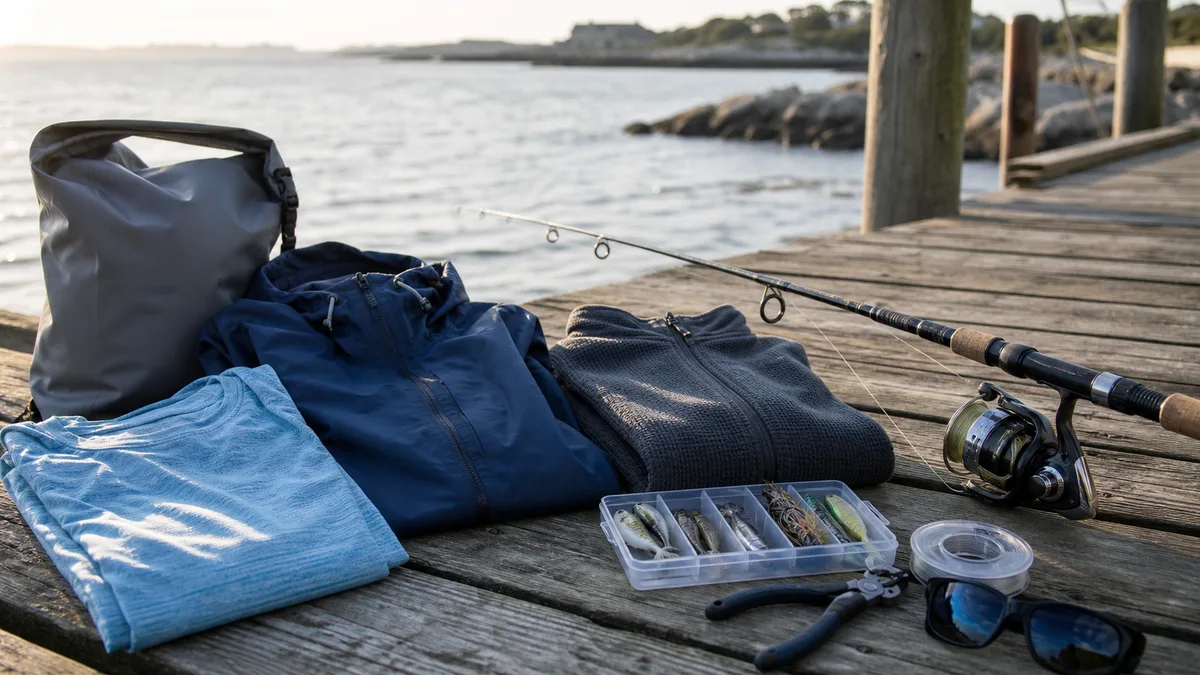
Build the kit around the day in front of you: wind, rain, sun, spray, tide, boat ride, walking distance, and how cold the first and last hour may feel. Northeast coastal fishing changes fast. A sunny beach walk can turn into a cold southwest wind after dark, and a calm inshore run can still leave you wet from spray on the ride home.
The right checklist is not the biggest pile of gear. It is the smallest kit that keeps you fishing safely, comfortably, and with enough options to adjust when the bite changes.
Worn gear
Start with the items on your body because they decide how long you can stay. For summer surf sessions, light sun protection matters more than heavy layers. For spring, fall, and boat days, wind and spray deserve the same respect as rain.
- Fishing shirt or sun hoodie with enough coverage for a full tide
- Hat, polarized sunglasses, neck gaiter, and light gloves
- Shell, bib, or packable rainwear when spray or fronts are possible
- Warm midlayer for dawn, dusk, and shoulder-season wind
- Footwear matched to the water: deck boots, wading boots, sandals, or wet-wading shoes
- Dry backup layer in the truck or boat bag
For a deeper apparel breakdown, use the fishing apparel guide, sun protection guide, waders and boots guide, and rainwear and bibs guide. Those pages separate worn apparel from tackle so shopping decisions stay cleaner.
Patagonia buyer paths
If Patagonia is already on your shortlist, skip the broad catalog and use the page that matches the missing layer: sun hoodies and fishing shirts, rain jackets and wading shells, waders and boots, packs and waterproof bags, or cold-weather layers.
Rod, reel, and line
Match the setup to the water first, then to the species. Open beach surf fishing usually rewards casting distance and lure range. Jetties and inlets need control around current, rock, and landing angles. Inshore boat fishing often benefits from shorter rods, lighter presentations, and quick adjustments.
- Surf setup for plugs, tins, bucktails, and bait when fishing open beaches
- Inshore spinning setup for back bays, harbors, rips, and light structure
- Heavier boat setup when fishing deeper current, bottom rigs, or larger targets
- Fresh braid, leader material, and a few spare leaders already tied
- Reel maintenance basics: fresh rinse routine, drag check, and a clean spool lip
If you are building from scratch, begin with the rods and reels guide and then narrow by the places you actually fish most.
Tackle and terminal
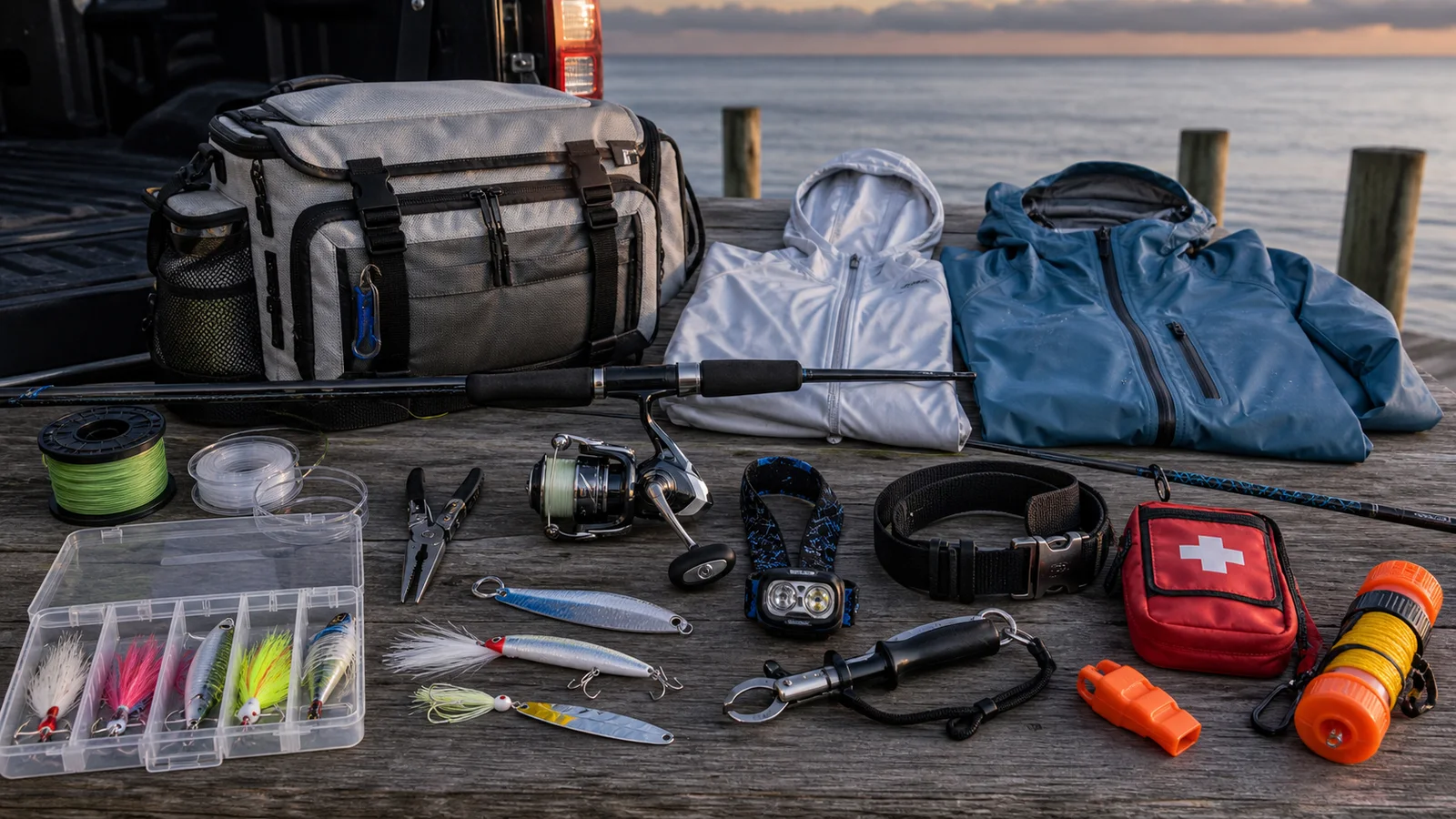
The best tackle box for the Northeast is seasonal and location-specific, but a practical starter kit should cover the major lanes: search, depth control, profile change, and quick rig repair. Keep it organized enough that you can change without digging in the dark.
- Bucktails in a few weights for current, depth, and bottom contact
- Swimmers and darters for moving water and low-light surf
- Topwater plugs for calm mornings, bunker schools, and visual feeds
- Soft plastics and jigheads for inshore, back bay, and light-tackle work
- Tins or metals for distance, wind, and sand eel situations
- Hooks, clips, swivels, split rings, and leader material
- Pliers, cutters, hook file, tape, and a small repair kit
For shopping and product discovery, the tackle catalog is the cleaner starting point because it separates surf, inshore, offshore, terminal tackle, tools, storage, and electronics.
Boat and inshore extras
Boat and kayak days need a few more planning layers than a quick beach walk. Think about what happens when weather changes, the bite moves, or a simple rig failure costs time.
- Dry bag or sealed box for phone, license, keys, and backup layer
- Compact first aid kit and sunblock
- Knife, dehooker, fish grips, and measuring tool
- Extra leader, jigheads, weights, and hooks in a small waterproof tray
- Battery, charger, transducer, and mount checks for electronics
- Cooler, ice, and fish handling gear if keeping fish legally
For electronics and outdoor equipment, use the fishing tech guide and gear closet rather than mixing those purchases into the lure box.
Surf-specific add-ons
Surf fishing gear has to carry well. If you will walk a mile of sand, everything should earn its place.
- Surf bag or small shoulder pack with drainage
- Plug wraps or trays that do not tangle hooks
- Waders, belt, boots, and studs where appropriate
- Light, backup light, and spare batteries for night tides
- Pliers on a leash, leader spool, clips, and a compact plug selection
- Small towel, tape, and dry layer for the ride home
The surf version of this checklist lives in the surf fishing gear guide, which is better for surf-only shopping decisions.
Quick pre-trip check
Run this five-minute check before leaving:
- Weather, wind direction, tide, surf height, and marine forecast
- Access rules, parking, permits, and seasonal restrictions
- Rod and reel matched to the target water
- Leader, clips, hooks, and pliers packed where you can reach them
- Apparel chosen for the coldest and wettest part of the trip
- Water, snack, light, phone battery, and safe exit plan
Useful next step
For the broader gear guide, start with Gear. Build the kit around clothing, rods, reels, electronics, outdoor equipment, lures, terminal tackle, tools, storage, and Northeast-specific fishing setups. For Patagonia-specific shopping, use the Patagonia clothing and fishing gear hub so rainwear, sun layers, packs, waders, cold layers, Web Specials, and current picks stay in one clean path.


