
Field Note
July Fluke and Black Sea Bass Plan: Fish the Structure, Not the Rumor
A practical July playbook for Northeast boat and shore anglers targeting fluke and black sea bass around reefs, wrecks, channels, tide windows, and changing summer weather.
The quick take
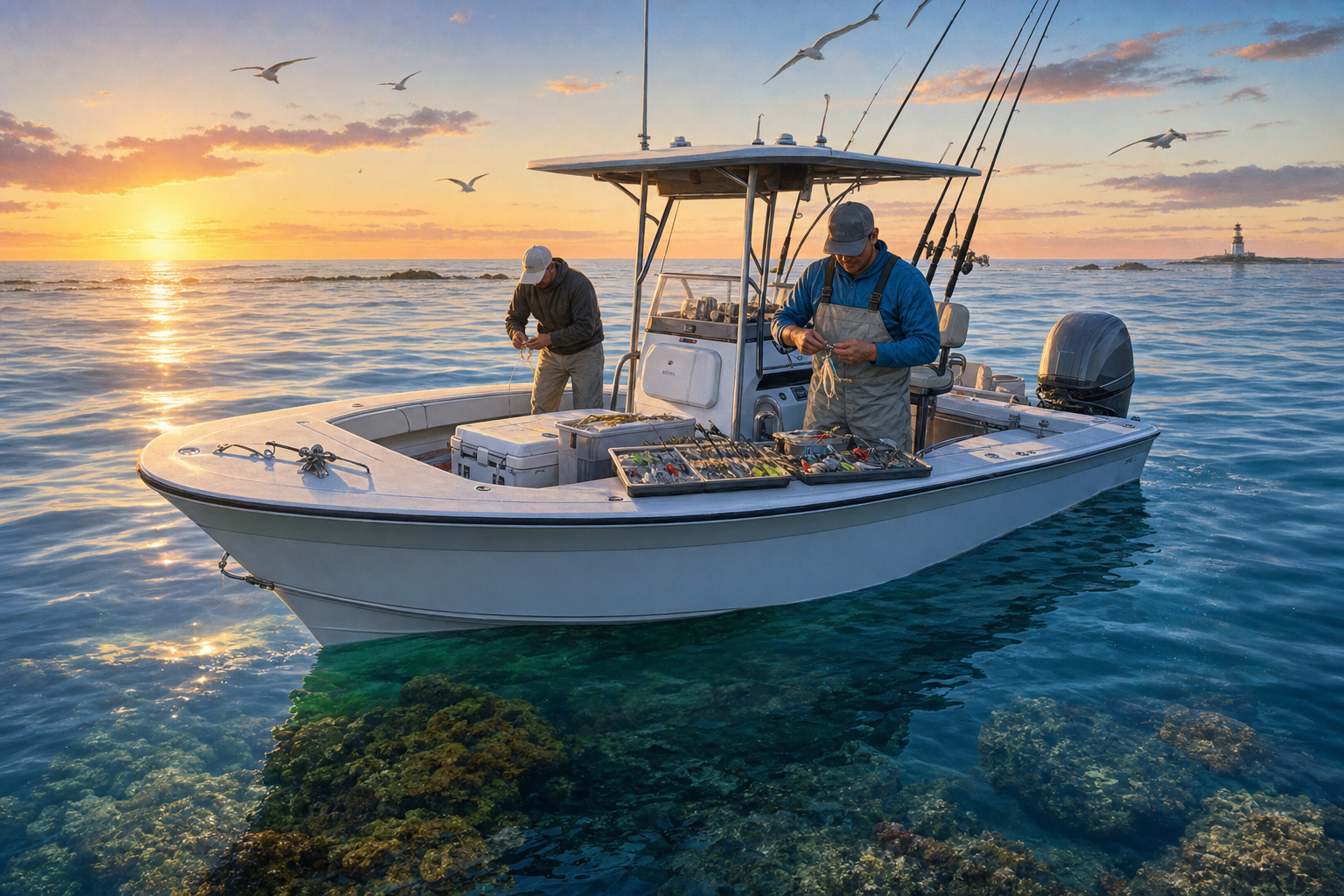
If you are trying to make a July meat-and-action trip in the Northeast, fluke and black sea bass should be near the top of the board. The better plan is not “run to yesterday’s number.” It is to build a short list of structure that gives bait a reason to stall, then fish the tide window when your drift, depth, and bottom contact line up.
That matters this week because July crowds, heat, boat traffic, and fast-changing wind can turn a good report into a frustrating ride. A disciplined structure plan travels better than a dock rumor.
Field rule: fluke reward drift control; black sea bass reward structure contact. The overlap is where July boat trips get interesting.
Why this is a timely Northeast trip plan
Official regulation pages are current enough to make this a real planning subject, not just a seasonal hunch. New York DEC says its recreational saltwater limits were last changed on May 12, 2026, and lists summer flounder, black sea bass, scup, striped bass, and other marine species by size, possession limit, and season. Rhode Island’s active finfish rule shows an effective date of May 17, 2026, and spells out 2026 changes including black sea bass management. NOAA Fisheries also updated its black sea bass and summer flounder species pages on June 25, 2026.
That does not mean you should treat any article as a regulation card. It means the fisheries are active, summer seasons are in motion, and Northeast anglers need a plan that starts with verified state rules before the boat leaves the dock.
For New York marine waters, DEC lists black sea bass at 16 inches with a May 16-Aug. 31 private-angler limit of 3 fish and a Sept. 1-Dec. 31 limit of 6 fish. DEC lists summer flounder with a 3-fish limit and split size periods of 19 inches from May 4-Aug. 1 and 19.5 inches from Aug. 2-Oct. 15. Rhode Island’s active rule lists recreational black sea bass at 16 inches with private anglers at 3 fish from May 16-Aug. 26 and 3 fish from Aug. 27-Dec. 31; its summer flounder rule lists 19 inches, April 1-Dec. 31, and 6 fish per person per day, with special shore-site rules for a limited number of smaller fish at named access points.
Those differences are the first lesson: the Northeast is local. A Long Island Sound trip, a Montauk trip, a Rhode Island reef trip, and a Massachusetts/Cape Cod run can look similar on a chart and be different under the law. Check the state page for the water you fish and the port you return to.
The structure-first approach
Fluke and black sea bass often share the same general neighborhood, but they do not always use it the same way.
Fluke: edges, sand lanes, and moving food
Fluke are ambush feeders. NOAA describes summer flounder as a flatfish managed in state and federal waters, with regulations that typically include annual harvest limits, closed seasons, minimum sizes, and possession limits. For the angler, the practical takeaway is simpler: fluke want food to pass close enough that they can explode off the bottom without wasting energy.
Look for:
- Sand lanes beside rock piles.
- Channel edges where depth changes quickly.
- The down-tide side of mussel beds, rubble, and artificial reef pieces.
- Rips where bait and squid get pushed along a contour.
- Clean patches between sticky bottom and open sand.
The drift matters because the lure must move like food, not like an anchor. Too slow and the bait drags lifelessly. Too fast and you lose bottom contact or race through the strike zone. July southwest wind can make that drift tricky, especially when it opposes the tide.
Black sea bass: hard bottom, vertical contact, and quick decisions
NOAA’s black sea bass profile describes a fish strongly associated with structured habitat such as reefs, wrecks, oyster beds, and other bottom complexity. That matches what Northeast boat anglers see every summer: when the bottom gets sticky, alive, or broken, sea bass can be right on it.
The trick is not simply finding any wreck. It is finding the part of the wreck, reef, or rock field that holds life without donating every rig. Sea bass will climb a few feet off the bottom when active, but your presentation usually needs to start close enough that the first drop is in the zone.
Good signs include:
- Short, repeatable bites on the first drop.
- Mixed scup, bergalls, and small sea bass around hard bottom.
- Cleaner water over structure after a tide change.
- Bait marks tight to the bottom rather than scattered high.
- A bite that improves when the boat drifts off the snag and onto the edge.
A practical July game plan
Do not start the morning with twenty numbers. Start with three categories.
1. The close backup
This is the nearshore reef, channel edge, bay piece, or local hard-bottom patch you can fish safely if wind, heat, traffic, or crew patience changes the day. The close backup saves trips. It is also where family anglers and newer boat crews often have the best time because the run is shorter and the decision-making is calmer.
Use it when:
- The marine forecast is borderline.
- The crew includes kids or first-timers.
- You need a tide-window trip before work, guests, or fireworks traffic.
- You want to test rigs without committing to a long run.
2. The primary structure drift
This is the main target: a reef piece, wreck edge, inlet-adjacent channel, or known bottom transition. The goal is to set up a drift that crosses structure and exits onto fishable bottom.
Run the first drift as a survey. Mark where bites happen, where sinkers hang, where the bottom changes, and where your angle falls apart. Then shorten the second drift. Most anglers waste time repeating the unproductive half of a drift because they are afraid to reset.
A productive July drift often has a tiny sweet spot:
- The first 30 yards after the reef high spot.
- The soft edge beside hard bottom.
- A sand tongue between two rough patches.
- A depth break where the drift slows for a minute.
- The side that gets current first after slack.
3. The tide-change option
Build one move around slack water or the first push after slack. Sea bass can bite hard right as the current becomes manageable. Fluke may turn on when the drift angle begins to make sense. If your first structure spot gets too fast, do not force it. Move to a channel edge, lee side, or shallower piece that lets you maintain contact.
The rigging checklist
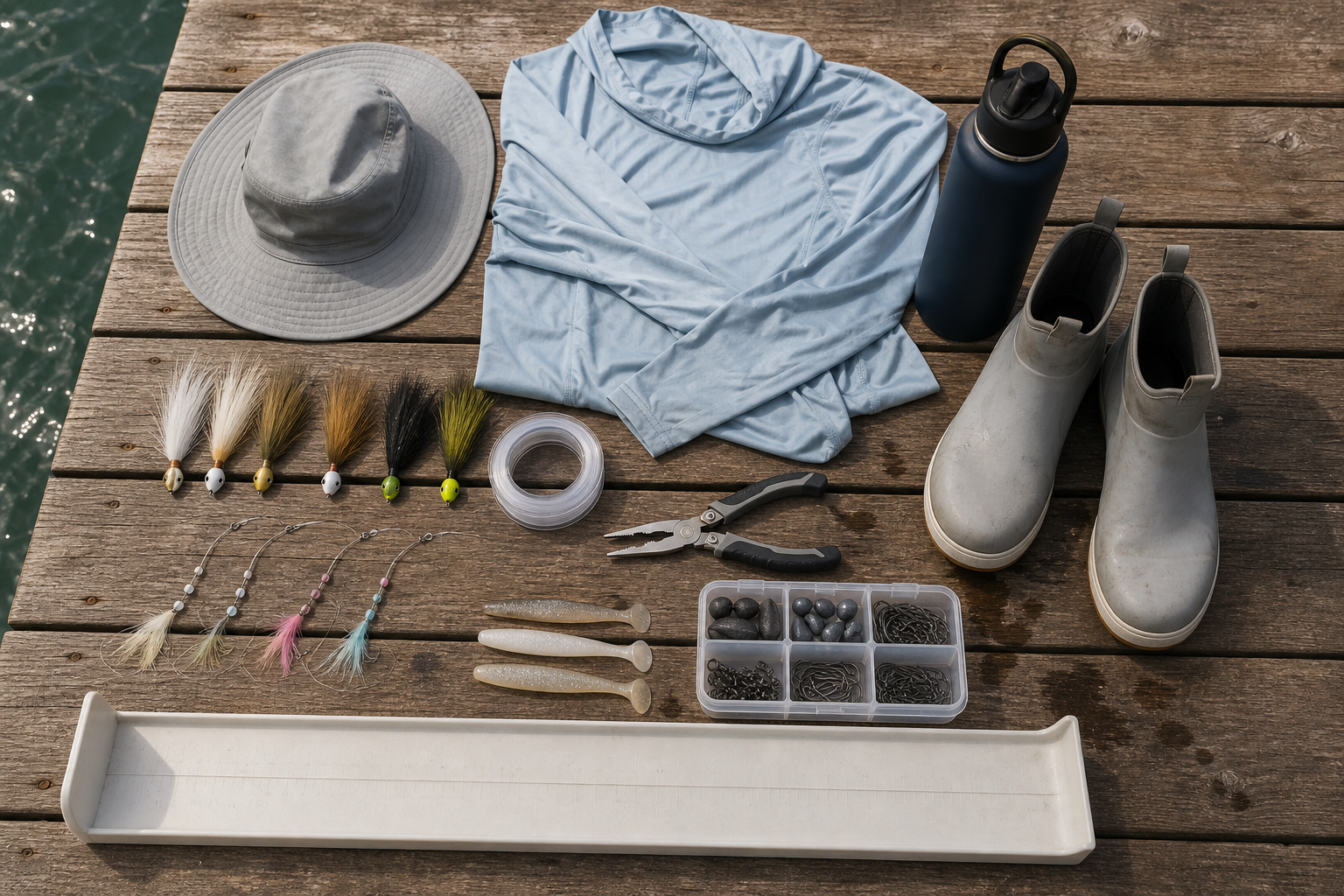
A July fluke-and-sea-bass kit does not need to be complicated. It needs to be organized enough that you can adjust weight, profile, and leader length without turning the cockpit into a knot pile.
Bring:
- Bucktails in several weights so you can hold bottom as wind and tide change.
- A few high-low or teaser rigs for sea bass over sticky structure.
- Soft plastics, squid strips, spearing, or other legal bait options based on local preference and availability.
- Leader material, clips, extra sinkers, and a rig wallet.
- Measuring board that is easy to read on deck.
- Venting/descending awareness for deep-water releases where appropriate and legal guidance applies.
- Pliers, dehooker, knife, spare towels, and a dedicated trash bag for old line.
- Sun shirt, hat, polarized glasses, water, and rain shell.
If you are rebuilding the kit, start with the site’s boat fishing gear guide, tackle catalog, and saltwater rods and reels guide. The best purchase is not always the flashiest rod. Sometimes it is a better measuring board, safer deck footwear, or enough terminal tackle to stay efficient when the bite is short.
Drift control beats secret bait
The social-media version of July bottom fishing makes it sound like one magic color or one exact bait did the work. Sometimes a detail matters. Usually, the boat did the work first.
Focus on:
Speed
If the drift is too fast, step up weight, use a drift sock if appropriate, change angle, or move to a spot with less current. If the drift is dead, look for a tide edge, deeper contour, or wind line that gives the bait motion.
Angle
A slightly quartering drift can cover the edge better than a straight-down drop. Watch the line angle. When everyone is scoping far behind the boat, you may be fishing more water column than bottom.
Reset discipline
Do not let the boat wander for 15 minutes after the productive stretch ends. Mark the bite, motor back carefully, and repeat the lane. The best captains are not just good at finding numbers; they are good at repeating 90 productive seconds.
Shore and family anglers still have a lane
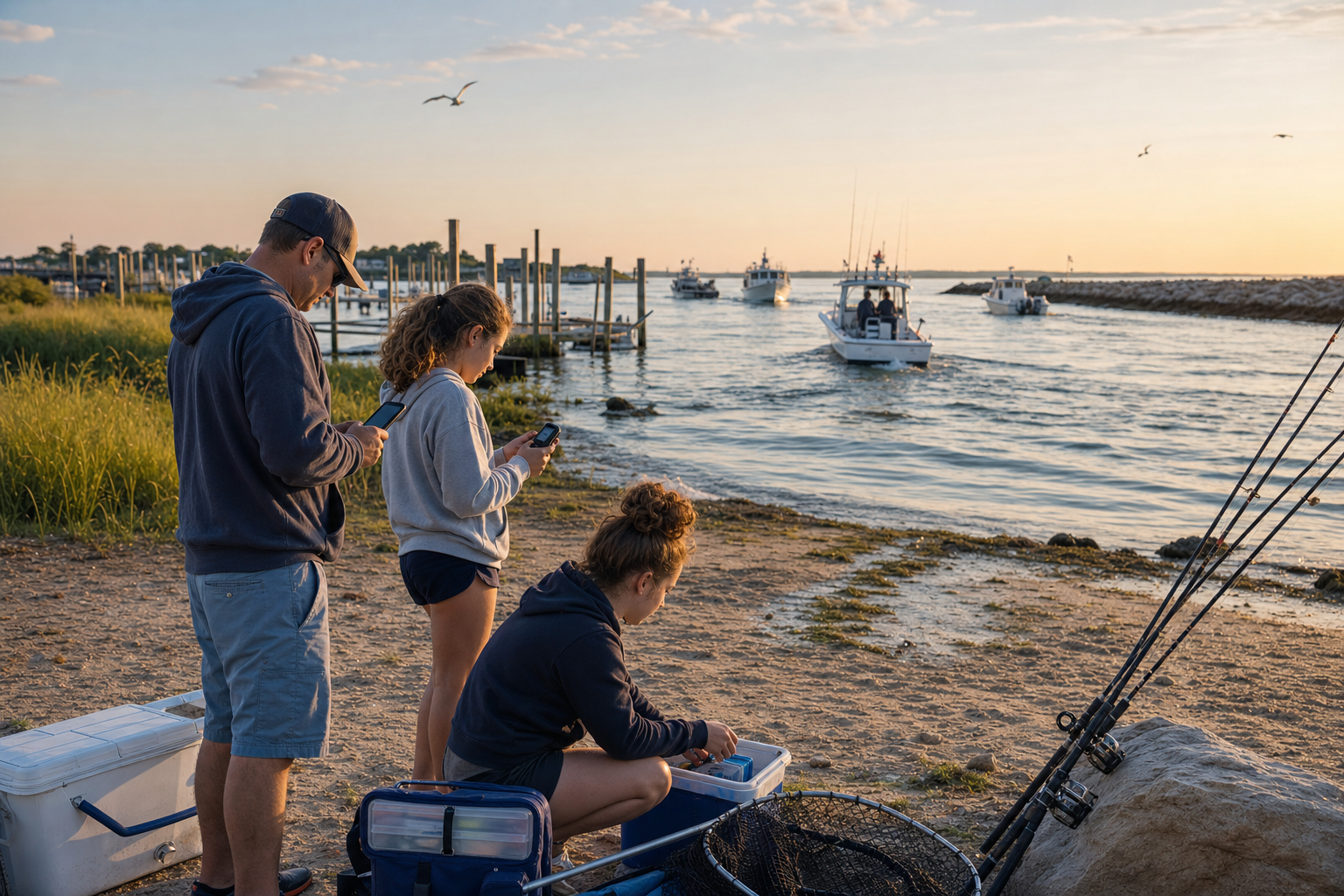
This is not only a boat article. Rhode Island’s rules specifically name special shore angling sites for summer flounder where different shore-site provisions can apply. Long Island also has bays, docks, piers, and channels where light-tackle anglers can target fluke when the tide sweeps bait along reachable edges.
Shore anglers should think small and specific:
- Fish a channel bend instead of a random flat.
- Cast up-current and let the rig sweep naturally.
- Use enough weight to tick bottom without burying.
- Move after a few clean passes if the edge feels dead.
- Check access, parking, local ordinances, and state rules before keeping fish.
For Long Island trip ideas, use the Long Island fishing guide as a planning hub, then check local tides and weather before you commit.
Safety and weather: the unviral part that saves the day
NWS active alerts checked during this research window showed no active Beach Hazards Statement or Small Craft Advisory for New York, Rhode Island, Massachusetts, Connecticut, or New Jersey at the 13:00 UTC update on June 30, 2026. That is useful context, not a promise. Marine weather changes quickly, and local wind against tide can make a short run uncomfortable long before a broad advisory appears.
Before launching, check:
- Marine forecast for your exact zone.
- Wind direction against tide at the inlet.
- Fog, thunderstorms, and afternoon sea breeze potential.
- Heat, hydration, and shade.
- Ramp traffic and holiday-week parking.
- Float plan, radio, PFDs, and navigation lights if you may return late.
Use the Northeast Fishing Trip Planner before you leave, then make the final call at the dock with live conditions in front of you.
A simple two-hour plan
If you only have a short window, use this sequence:
- Pick a structure piece within a safe run.
- Arrive 30 minutes before the tide stage you want to test.
- Make one long survey drift to map bites and snags.
- Shorten the drift around the best bottom transition.
- Adjust weight before changing the whole rig.
- Keep only legal fish you can measure confidently.
- Leave enough time for a safe, unhurried run home.
That plan will not beat every hot report. It will beat a lot of random running.
The takeaway
July fluke and black sea bass fishing is not about choosing between luck and science. It is about stacking small advantages: verified regulations, safe weather, structure, tide, bottom contact, and enough discipline to repeat the productive lane.
Fish the structure first. Let the rumor come second.
Plan the next trip
Check the Northeast Fishing Trip Planner, build the boat kit from the boat fishing gear guide, and keep the tackle catalog handy before your next July bottom-fishing window.
Sources consulted
- New York State Department of Environmental Conservation, “Recreational Saltwater Fishing Regulations,” accessed June 30, 2026.
- Rhode Island Department of State, 250-RICR-90-00-3 Finfish, active rule effective May 17, 2026, accessed June 30, 2026.
- Rhode Island Department of Environmental Management, “Marine Fisheries Regulations” and “Marine Fisheries Minimum Sizes & Possession Limits,” accessed June 30, 2026.
- NOAA Fisheries, “Black Sea Bass” species profile, updated June 25, 2026.
- NOAA Fisheries, “Summer Flounder” species profile, updated June 25, 2026.
- National Weather Service API active alerts for Beach Hazards Statement and Small Craft Advisory in NY, RI, MA, CT, and NJ, updated June 30, 2026 at 13:00 UTC.