
Field Note
Bluefish Without the Chaos: Rigging and Handling for Surf and Boat Anglers
A practical Northeast bluefish guide covering leader choices, durable lures, hook control, pliers, surf and boat handling, release, and current regulation checks.
Quick take
Rig for teeth and hook control before the bluefish arrive. Carry long-reach pliers or a dehooker, use a leader suited to the fish and lure, simplify multi-hook plugs when practical, clear the landing area, and never put fingers near a bluefish's mouth. Check current state rules before keeping fish.
Bluefish can turn a slow Northeast tide into a fast one. They can also turn a loose plug, short pair of pliers, or crowded cockpit into a problem in seconds.
Their teeth are the obvious hazard. The less obvious hazard is the lure. A bluefish twisting on one treble can drive the other treble into a hand, net, wader, seat cushion, dock line, or another person.
The best bluefish setup is not complicated. It is controlled.
Build the release kit first
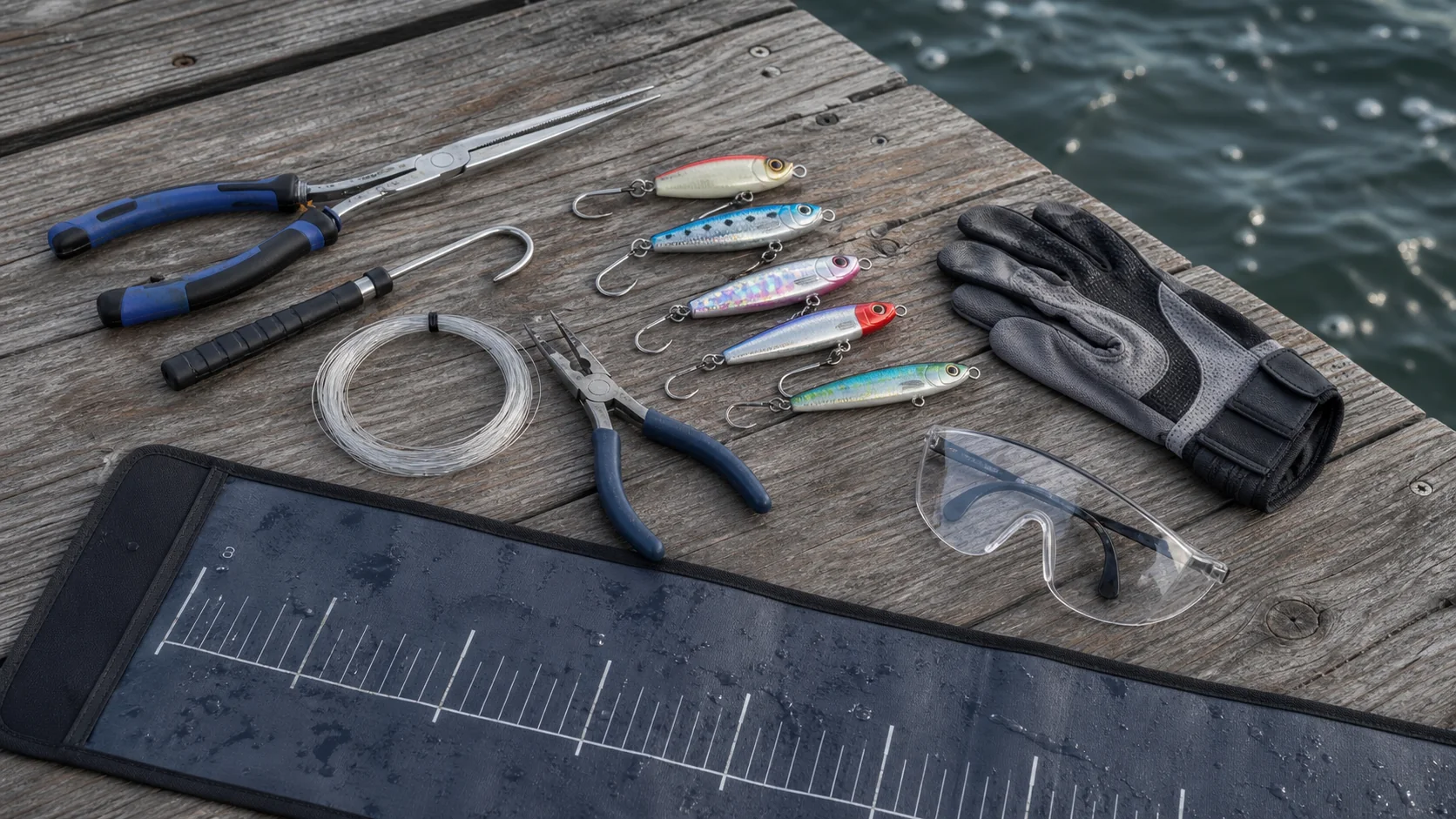
Before choosing a lure, make sure the landing and release tools are ready:
- Long-reach pliers that open and close cleanly.
- A dehooker appropriate for the hooks and fish being used.
- Leader cutter or side cutters that can cut the actual leader and hook wire.
- Eye protection.
- Gloves for line and hook handling, not for grabbing a fish by the teeth.
- A wet measuring mat or clear deck space.
- A net suitable for the boat and lure type, if a net is part of the plan.
- Current state regulations and a ruler if fish may be kept.
Tools buried under a tackle bag do not count. Put them where they can be reached before the first fish is alongside.
Choose the leader for the bite, not the story
Bluefish can cut or abrade light leader. That does not mean every trip needs the heaviest wire available.
Use the least complicated leader that keeps the lure fishing properly and limits preventable bite-offs. The choice depends on fish size, lure, water clarity, retrieve, and how aggressively the fish are striking.
Common options include:
- Heavier monofilament or fluorocarbon: less visible and often enough when fish are small, strikes are clean, or the lure stays away from the teeth.
- Single-strand or flexible wire: useful when bite-offs are frequent, fish are engulfing the lure, or losing a hooked lure would create an avoidable hazard.
- A replaceable bite section: practical when only the final section is taking damage.
Inspect the leader after every fish or missed strike. Roughness, kinks, white stress marks, damaged crimps, and bent clips are reasons to retie.
Do not let a leader debate distract from the bigger issue. A damaged connection is bad whether it is wire or mono.
Durable lures make the session easier
Bluefish will hit many of the same profiles used for striped bass and other inshore predators. Metals, bucktails, poppers, pencils, swimmers, and durable soft plastics all have a place.
For a dedicated bluefish session, favor lures that:
- stay connected in the wind and current;
- can handle repeated contact with teeth;
- have hardware matched to the lure;
- are easy to control at the beach, rail, or gunwale;
- do not require a long repair after every fish.
Soft plastics can be effective, but a fast bluefish bite can tear through them. Keep the setup simple enough that re-rigging does not consume the whole tide.
Reduce loose hooks when practical
A plug with two or three treble hooks creates more points that can catch the fish, the angler, and everything nearby. Some anglers replace trebles with appropriately sized inline single hooks or remove an unnecessary hook where the lure still swims correctly.
Any hook change has to preserve the lure’s balance, strength, and action. Use hardware designed for the load and confirm the lure still tracks correctly before fishing it in current or around people.
Single hooks do not make careless handling safe. They make the hook situation easier to see and manage.
Crushing barbs can also make release and emergency removal easier, but anglers should understand how the change affects hook retention and local rules. The main rule remains the same: control the lure before reaching for the fish.
Landing bluefish from the surf
A surf landing goes better when the angler plans the last ten feet before the fish reaches the wash.
- Pick a clear landing lane away from swimmers and other anglers.
- Keep steady pressure without dragging the fish across dry sand.
- Use the receding wash to position the fish on wet sand or a wet mat when conditions allow.
- Keep feet away from the mouth and lure.
- Control the leader without wrapping it around a hand.
- Use pliers or a dehooker before lifting or carrying the fish.
- If the surf is too rough to control the fish and hooks, cut the leader rather than creating a hand injury.
Do not hold a bluefish by putting fingers in its mouth. Do not pin it with a boot near the hooks. Do not ask a child or unprepared bystander to “just grab the leader.”
If the fish is still green and the plug has loose hooks, give it room until the situation settles.
Landing bluefish on a boat
The cockpit needs a plan too.
Before the fish comes aboard:
- Clear rods, bags, and loose line from the landing side.
- Decide whether the fish will be released in the water, controlled at the gunwale, or netted.
- Put the pliers and cutter within reach.
- Keep passengers back.
- Stop the boat or manage the drift as needed for a safe landing.
A bluefish bouncing across the deck with a multi-hook plug is not harmless action. Control the fish and lure in one defined area. If a net is used, expect hooks to catch mesh. Keep hands outside the net until the lure is stable.
When release at the side is possible, a long dehooker can reduce deck time. If the fish must come aboard, use a wet surface and keep the handling short.
Handling and release
NOAA Fisheries advises anglers to plan for release, use tackle that brings fish in without an unnecessarily long fight, minimize handling and air exposure, keep fish wet, and use proper release tools.
For bluefish:
- Keep hands away from the mouth and gill area.
- Support the body rather than hanging a fish for a long photo.
- Wet hands or the contact surface.
- Remove hooks with tools.
- Cut the leader if hook removal would cause more injury or create an unsafe situation.
- Return the fish promptly and let it regain control in the water.
A kept fish should be handled according to current state rules and cooled promptly. Regulations for bluefish can change by state, date, and fishing mode. Check the official agency page before the trip instead of relying on an old screenshot or dock conversation.
When children or new anglers are fishing
Bluefish can be a great target for a new angler because the strikes are clear and the fight is active. The landing needs an adult plan.
- Use one active rod per new angler.
- Keep observers behind the casting and landing lane.
- Let an experienced adult handle the leader, lure, and fish.
- Use eye protection.
- Stop casting when fish are being unhooked nearby.
- Explain where the pliers and cutter are before the bite.
Excitement is not the problem. Unassigned jobs are.
A quick rig check after every fish
Before the next cast, inspect:
- leader damage;
- clip, swivel, knot, or crimp;
- bent hook points;
- split rings;
- cracked lure bodies;
- line wrapped around a hook;
- pliers and cutter returned to their place.
That check takes less time than chasing a lost lure or dealing with a bent hook beside the boat.
A controlled bluefish plan
Start with a lure that fits the water, a leader that fits the bite, and tools that fit the hooks. Use the Surf and Saltwater Tackle guide for the broader lure-and-tool setup, and the Long Island Surf Bag Checklist for carry and release gear.
Then keep the session orderly. Bluefish do not need help making a tide loud.
Set up before the first strike
Match the lure, leader, tools, and landing lane
A few durable pieces of tackle and a clear release plan beat a crowded bag once bluefish show.