
Field Note
Saltwater Fishing Lures for Striped Bass
A practical striped bass lure guide for Northeast surf and inshore anglers comparing metals, soft plastics, topwater plugs, swimmers, bucktails, and terminal tackle.
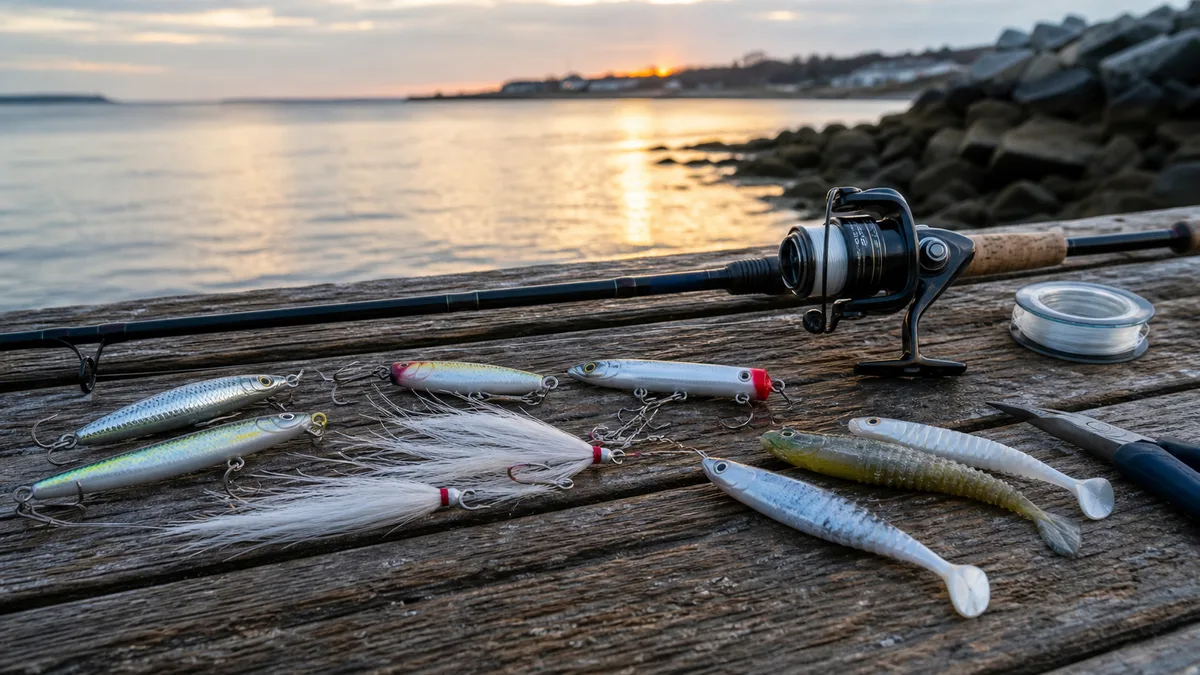
Planning note
Some articles reference earlier seasons, model years, or product availability. Confirm current details before buying gear or planning around a specific regulation, launch, or access point.
Start with the water in front of you
Striped bass lure choice gets easier when you stop ranking lures in the abstract and start with the conditions. Depth, current, bait size, wind, sweep, water clarity, and available casting room matter more than any single “best” lure.
For most Northeast surf and inshore trips, a useful striped bass box covers five jobs: reach fish at distance, stay in the strike zone, imitate local bait, draw attention in low light, and survive rocks, sand, current, and bluefish.
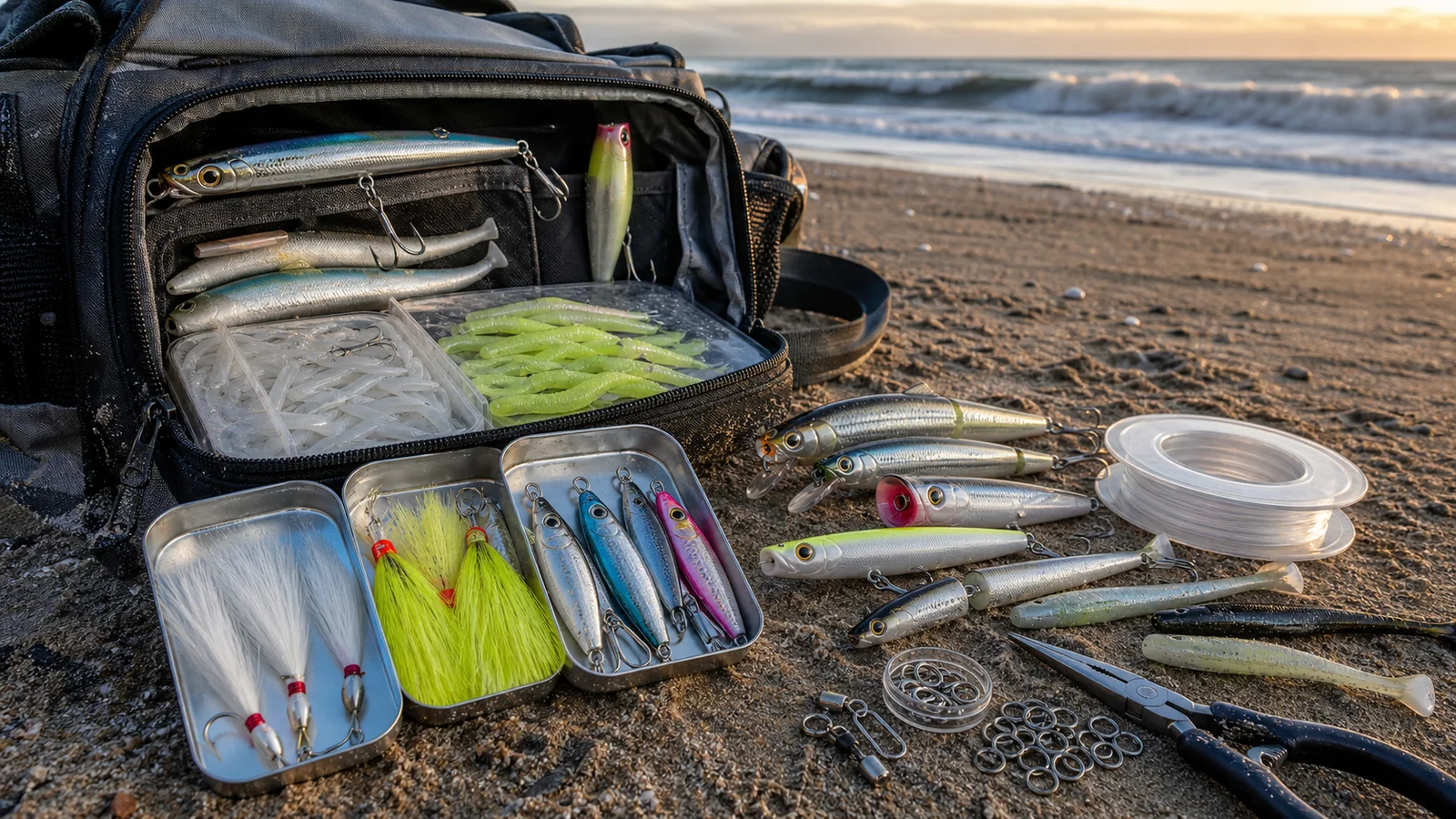
Metal Lures
Metals earn their place because they cast far and cover water fast. They are useful when wind is in your face, fish are outside plug range, bait is small, or the beach has enough sweep that lighter lures will not track cleanly.
Use tins, epoxy jigs, diamond jigs, and slim casting metals when you need distance and a direct connection. Retrieve speed should match the bait and current. Sometimes that means a fast, skipping retrieve for albies or bluefish mixed with bass. Other times it means a slower sweep that keeps the lure swimming just above bottom.
Soft Plastic Lures
Soft plastics are good when bass are keyed into sand eels, spearing, bunker, bay anchovies, or slower presentations around structure. Paddle tails, jerk shads, eel-style plastics, and swimbaits can be rigged light for shallow water or heavier for inlet current.
The main decision is weight. Too light and the lure washes out of the zone. Too heavy and it drags, fouls, or loses the natural movement that made the plastic useful in the first place.
Topwater Lures
Topwater plugs are not just for drama. Poppers, pencil poppers, spooks, and surface swimmers help you search shallow water, call fish up in low light, and work around visible bait without immediately dropping below the feed.
They fit dawn, dusk, overcast surf, boulder fields, breachways, and calm back-bay water. If bass are swiping and missing, slow down, add pauses, or switch to a swimmer or soft plastic that stays under the surface.
Swimmers and Minnow Plugs
Bottle plugs, darters, metal lips, and minnow-style swimmers belong in the same conversation because they hold water differently than topwater plugs or metals. They are useful when current gives the lure action and you want a slower presentation with more presence.
Match the plug to the water. Some swimmers need current. Some handle rough surf. Some are better for quiet backwater. The wrong swimmer in the wrong water rolls, blows out, or fishes above the fish.
Bucktail Jigs
Bucktails are the practical problem solvers. They can imitate baitfish, crabs, squid, and bottom-hugging forage depending on weight, trailer, retrieve, and water depth. In inlets, cuts, rips, and deeper surf bowls, a bucktail lets you feel bottom and adjust quickly.
Carry a small range of weights instead of one favorite jig. The right bucktail is usually the one that touches bottom occasionally without dragging the whole retrieve.
Terminal Tackle Matters
Good lures fish badly with weak terminal tackle. Keep leader material, clips, swivels, split rings, hooks, pliers, and a surf-safe storage system in the plan. Check hooks after rocks, bluefish, and hard fights. Retie when the leader gets cloudy, nicked, or rough.
For a simple striped bass kit, start with a few casting metals, a few soft plastics with matching jig heads, one or two topwater plugs, a couple swimmers, bucktails in useful weights, leader material, clips, and pliers. Add from there based on the water you actually fish.
Carry and access gear for lure sessions
Lure selection is only useful if you can move with it. Striped bass lure fishing often means walking beaches, rocks, inlets, bridges, and back-bay edges with plugs, bucktails, leaders, pliers, spare layers, and sometimes wet access.
For organized plug, leader, tool, and layer carry, use Patagonia fishing packs and waterproof bags. If the lure plan includes wet sand, sweep, inlets, or cold shoreline access, use Patagonia waders and boots. For rain, spray, or wind during the tide window, use Patagonia rain jackets. For bright daylight sessions, use Patagonia sun hoodies.


