
Field Note
Vertical AI Agents Are Turning SOPs Into the New Software
Vertical AI agents are moving from demos into real workflows. Here is how operators should turn SOPs, approvals, evidence, and ownership into business leverage.
Updated June 29, 2026
The short answer
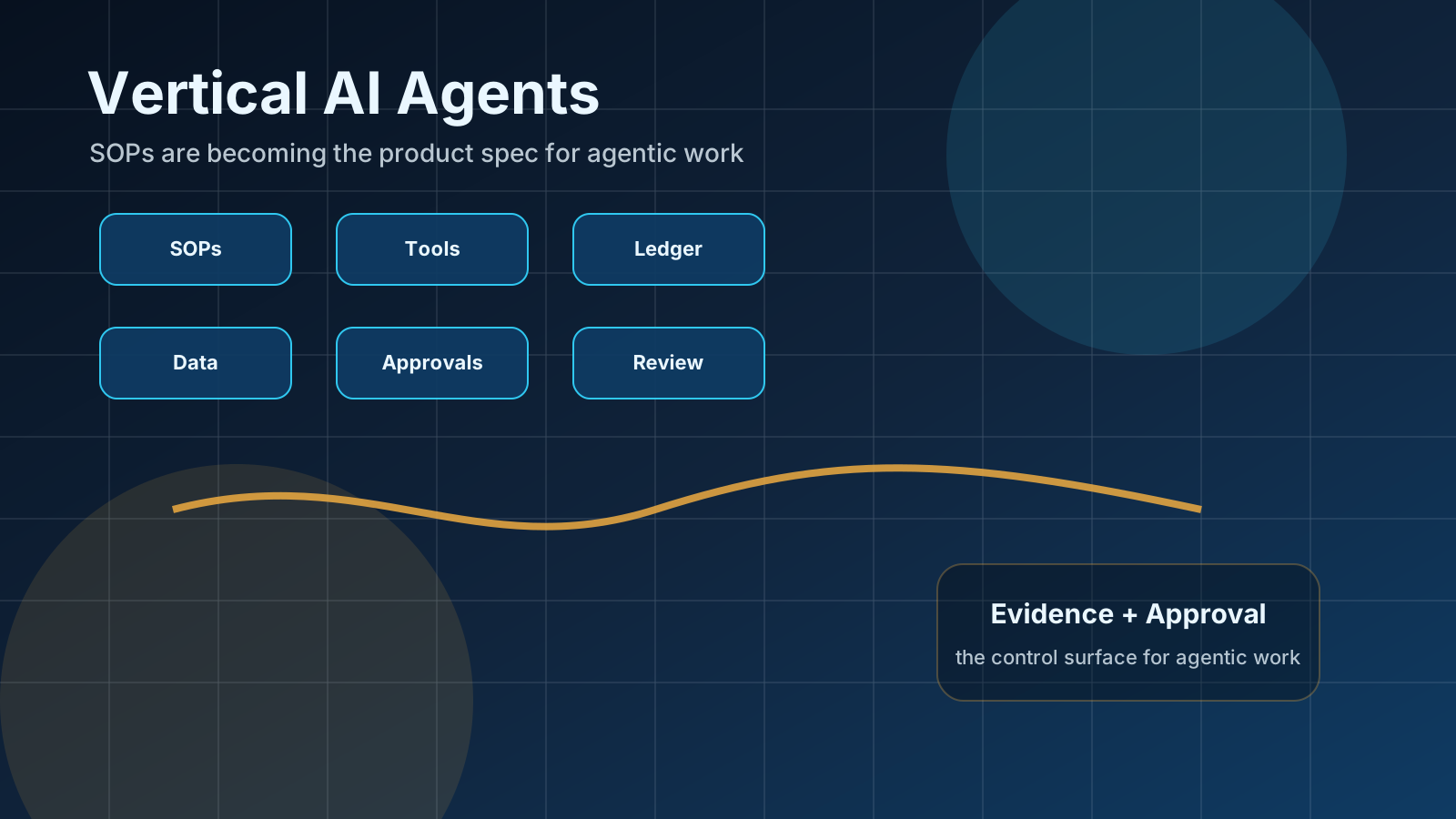
Vertical AI agents are turning standard operating procedures into the new software layer.
The market signal is getting hard to miss. OpenAI is publishing about agents transforming work. Forrester is writing about the rise of the “accidental developer” and the need for digital employee experience management as AI moves into employee workflows. Industry-specific platforms are launching agents for property management, finance, customer support, telecom operations, events, real estate, and voice workflows.
That does not mean every business should chase the newest agent product. It means the practical unit of advantage is changing.
The company with the clearest workflow, strongest source of truth, cleanest approval rules, and best evidence trail is easier to automate than the company with the flashiest tool stack. Your SOPs are no longer back-office paperwork. They are becoming the training set, control surface, and product spec for agentic work.
Why vertical agents are showing up now
Horizontal AI tools made the first wave obvious. Draft the email. Summarize the call. Generate the report. Search the document pile. That work is useful, but it is also easy to copy.
The next wave is more specific: agents that understand a narrow operating lane and can move work through the tools, rules, exceptions, and handoffs inside that lane.
That is why recent market activity keeps pointing toward vertical workflows. News and product announcements are clustering around agents for customer operations, finance operations, property management, real estate workflows, telecom OSS/BSS, and production voice-agent review systems. The common thread is not a chatbot. It is workflow execution inside a business context.
This is a better fit for operators because most companies do not lose money in generic tasks. They lose money in recurring workflows where small delays, missing approvals, duplicate entry, stale records, and weak follow-up compound every week.
The uncomfortable truth: messy SOPs become messy agents
An agent does not magically create operational discipline. It amplifies the instructions, data, incentives, and constraints it is given.
If the SOP is vague, the agent will be vague.
If the source of truth is disputed, the agent will route around ambiguity until someone catches it.
If approvals are tribal knowledge, the agent will either stop too often or proceed when it should not.
If nobody owns the workflow, the agent will create output that looks complete while the business remains unsure who is accountable.
That is why vertical AI is an operator problem before it is a software problem. The real work is converting the way the business actually runs into a workflow that can be assigned, observed, tested, interrupted, approved, and improved.
What operators should build before buying another agent
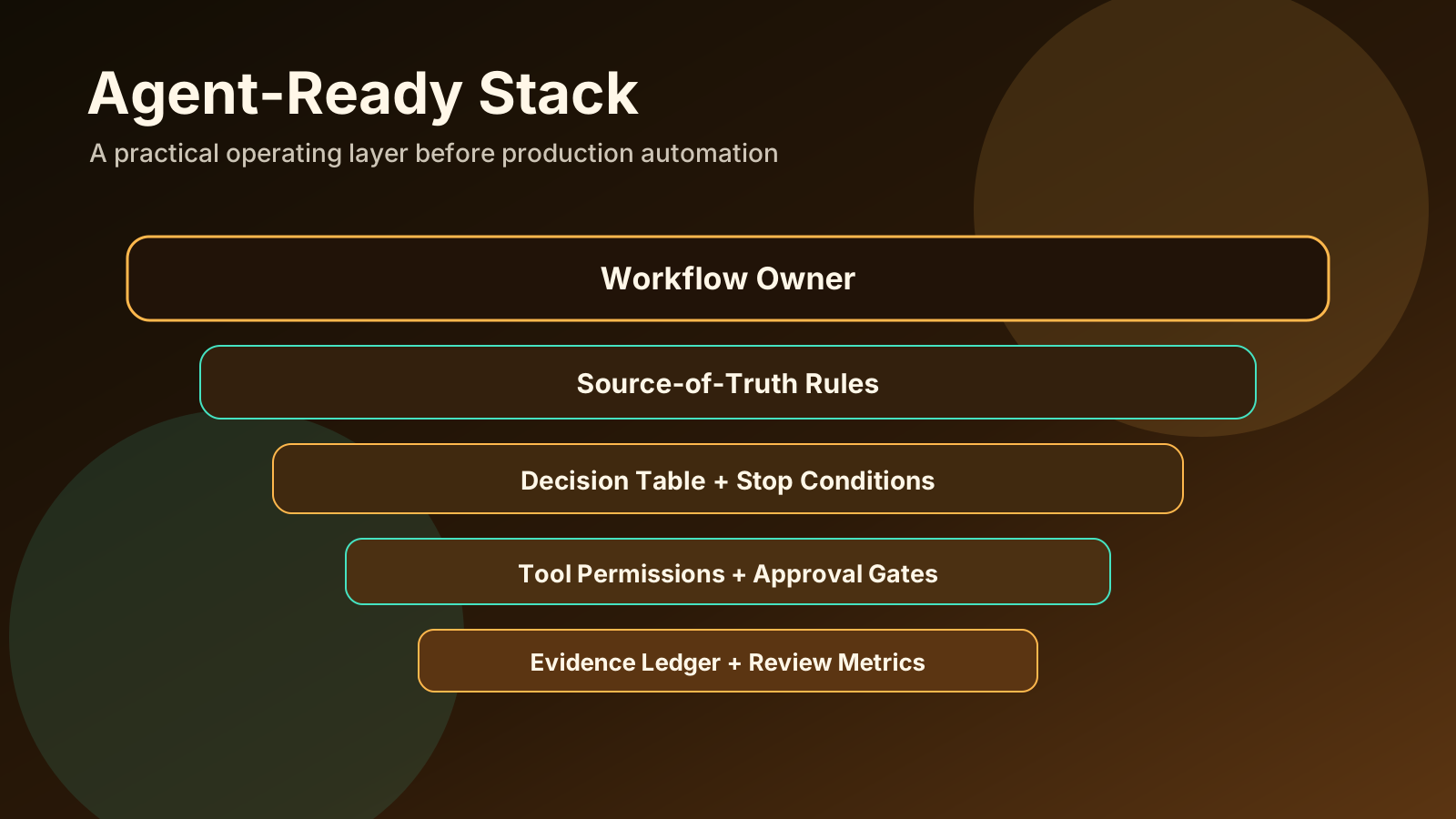
1. A workflow map with a named owner
Pick one recurring workflow where speed and accuracy matter. Examples:
- inbound lead qualification
- quote intake and follow-up
- invoice exception review
- customer support triage
- job status updates
- CRM hygiene
- vendor onboarding
- weekly operations reporting
Then name the owner. Not the department. A person.
The owner does not need to perform every step, but they are accountable for the workflow definition, source systems, exception rules, approval points, and measurement.
2. A source-of-truth rule
Agents fail quietly when they are allowed to treat every document, inbox, spreadsheet, CRM note, and Slack thread as equally authoritative.
For each workflow, write the rule:
- Which system wins when sources conflict?
- Which fields are allowed to be updated automatically?
- Which fields require human approval?
- Which source is only context, not authority?
- How old can evidence be before the agent must refresh it?
This sounds basic because it is basic. It is also where many AI projects break.
3. A decision table, not a wish list
Most SOPs are written like manuals. Agents need operating constraints.
Turn the workflow into a decision table:
| Condition | Agent action | Human approval? | Evidence required | Stop rule |
|---|---|---|---|---|
| Lead matches target segment and budget signal is present | Draft qualification summary and next-step email | Yes before sending | CRM fields, source URL, call notes | Stop if source conflicts |
| Invoice total differs from PO by less than approved tolerance | Flag for review with variance explanation | Maybe | Invoice, PO, receipt | Stop if vendor is new |
| Customer asks for cancellation | Classify reason and prepare save path | Yes | Conversation transcript, account status | Stop if refund policy is unclear |
A decision table exposes the difference between “the agent should handle this” and “the business has defined what handling this means.”
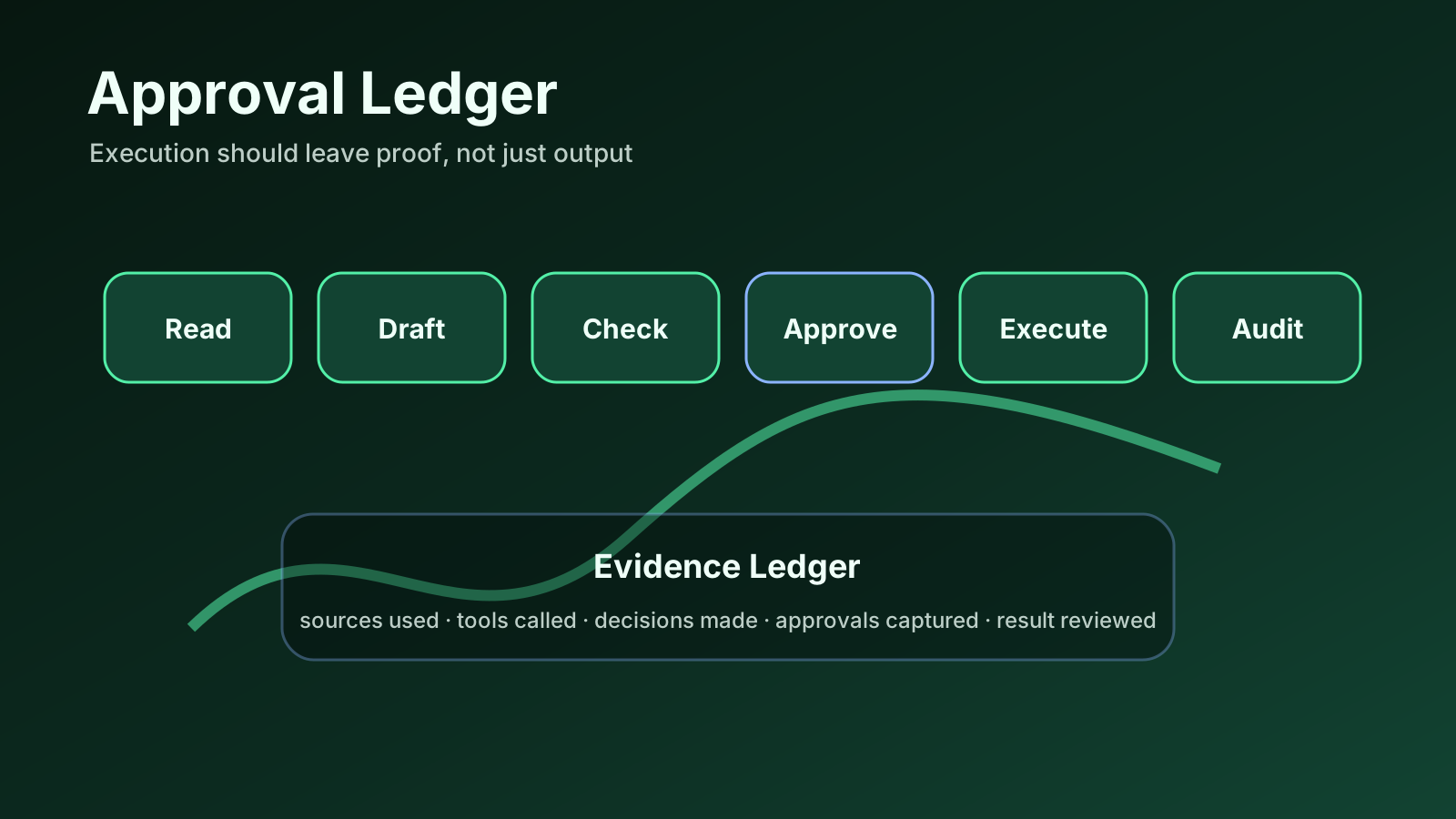
4. An evidence ledger
Every meaningful agent run should leave behind proof.
At minimum, capture:
- workflow name
- run time
- operator or trigger
- source documents used
- tools called
- decision path
- output generated
- approval state
- exception notes
- final business result
This does not need to be complex. A database table, spreadsheet, ticket, or structured log can work at first. The point is that the business can inspect what happened after the demo is over.
5. Approval gates that protect the business
Not every action needs human approval. The mistake is treating approval as a vague preference instead of a designed control.
Use approval gates where the action is externally visible, financially consequential, customer-facing, security-sensitive, legally sensitive, or hard to reverse.
The better rule is simple: agents can prepare more than they can execute. Let the agent gather evidence, draft the recommendation, prepare the update, and explain the path. Require approval before the action crosses a risk boundary.
The small-business advantage
Large companies have more data, more tools, and more budget. Small businesses can still move faster because they have less bureaucracy around workflow redesign.
A small operator can sit with the person who actually does the work, rewrite the SOP, define the approval line, and test an agent on ten real cases in a week. A larger company may need three committees just to agree which system owns the customer record.
That speed only matters if the operator stays disciplined.
Do not automate the whole company. Pick one workflow. Write the work packet. Define the evidence. Run a small batch. Review misses. Tighten the SOP. Then decide whether the workflow deserves deeper automation.
A practical 7-day rollout
Day 1: choose the workflow
Select one workflow with volume, repetition, and a clear business outcome. Avoid workflows where the rules are political, undocumented, or constantly changing.
Day 2: collect real examples
Pull 10 to 25 recent cases. Include clean cases and messy cases. The messy cases reveal the real operating rules.
Day 3: rewrite the SOP as a decision table
Convert prose into conditions, actions, approvals, evidence, and stop rules.
Day 4: define the agent boundary
Decide what the agent may read, draft, update, trigger, and never touch. Write the boundary plainly.
Day 5: run a shadow test
Let the agent process historical or copied cases without touching production systems. Compare its recommended actions against the human operator’s actions.
Day 6: review misses
Classify every miss:
- bad source
- unclear rule
- missing context
- weak prompt
- tool limitation
- approval ambiguity
- business exception
Do not just fix the prompt. Fix the operating rule.
Day 7: decide the next state
Move the workflow into one of four states:
- abandon because the workflow is not ready
- keep as human-only with better SOPs
- run as agent-assisted drafting with approval
- run limited production with evidence logging and human review
That decision is more valuable than another demo.
What not to do
Do not buy a vertical agent and hope it discovers your business model.
Do not let an agent update customer records without a rollback plan.
Do not measure success only by time saved. Measure error rate, review time, approval latency, customer impact, and whether the workflow is easier to inspect.
Do not confuse autonomy with maturity. The mature system is the one that knows when to stop.
Internal links to build the path
This article fits best as part of the site’s AI operations path:
- AI Agent Testing Is the New Operating Discipline
- The AI Automation Ledger: The Missing System Between Prompts and Profit
- AI Agents Need an Operating Layer, Not Another Demo
- AI Agents Won’t Save Broken Operations. They’ll Expose Them.
The operator takeaway
The next advantage in AI will not come from having the same agent tools everyone else can buy.
It will come from having cleaner workflows, sharper SOPs, better evidence, and approval systems that let automation move fast without making the business fragile.
If you run a company, your SOPs are not documentation after the fact anymore. They are becoming the product spec for how work gets done with agents.
Treat them that way.
Build the operating layer first
Turn one recurring workflow into an agent-ready system
Start with the workflow owner, source-of-truth rule, decision table, approval gate, and evidence ledger. Then test before you automate.
Sources consulted
- OpenAI, “How agents are transforming work,” published June 25, 2026.
- OpenAI, “Mapping Europe’s AI Workforce Opportunity,” published June 29, 2026.
- Forrester, “The Dawn Of The Accidental Developer,” published June 26, 2026.
- Forrester, “Why Your AI Strategy Needs Digital Employee Experience,” published June 26, 2026.
- Recent Bing News results on vertical AI-agent launches across customer operations, finance operations, real estate, telecom operations, and production voice-agent review systems, checked June 29, 2026.