
Field Note
Fog on the Water: A Northeast Fishing Go-or-No-Go Checklist
A practical fog checklist for Northeast boat, surf, inlet, and kayak anglers: visibility, navigation rules, tide, traffic, safety gear, and when to wait.
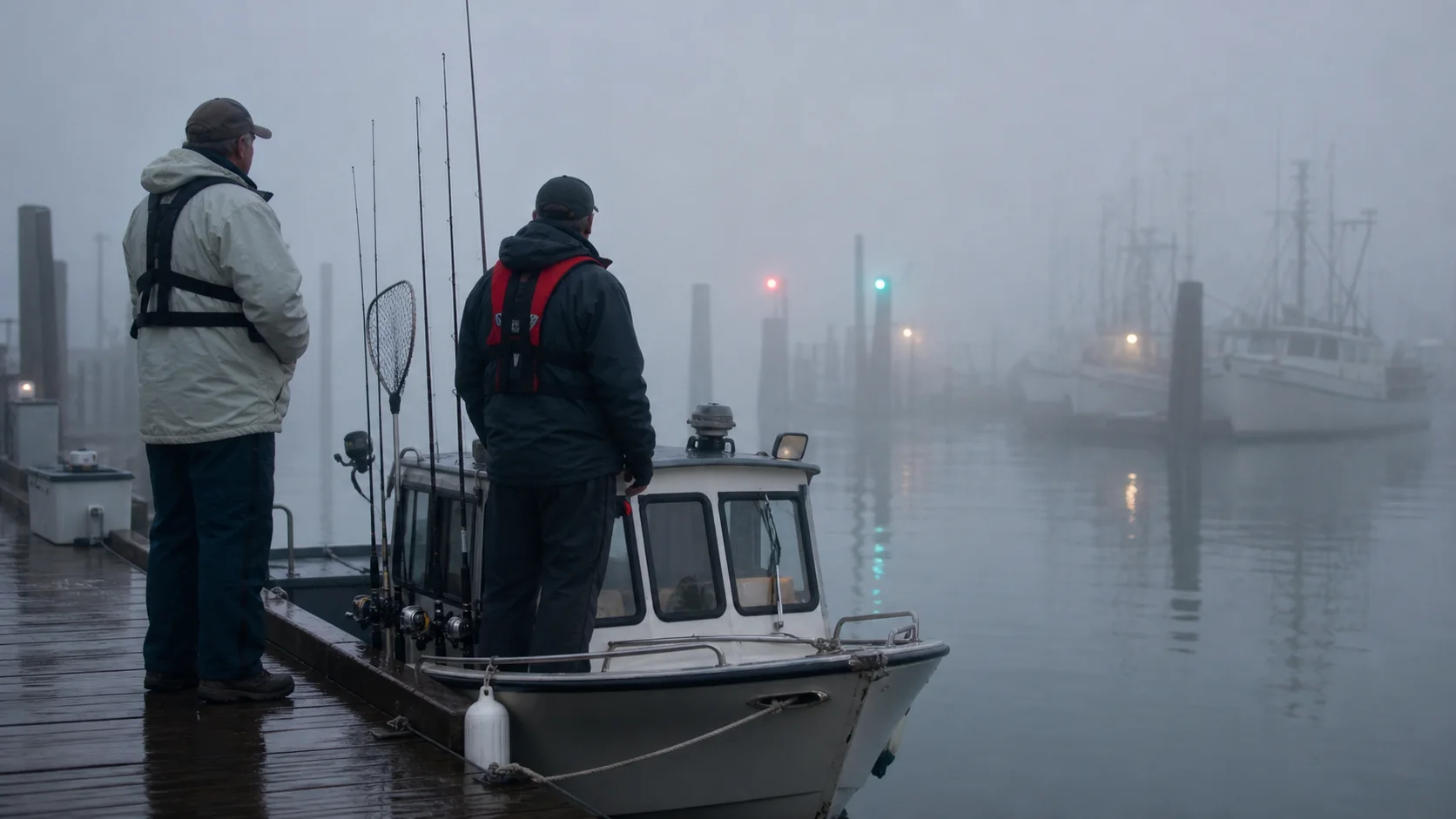
Quick take
If fog hides the next marker, shoreline, crossing boat, or safe exit, waiting is a fishing decision, not a wasted morning. Check the official forecast, visibility trend, tide, traffic, navigation equipment, communications, and return route before leaving. If fog forms underway, stop fishing and run the boat as a navigation problem.
Fog can make a familiar harbor look harmless. The water is flat. The ramp is quiet. The first fishing spot may be only a short run away.
Then the last dock disappears.
Northeast anglers deal with fog around Long Island Sound, Rhode Island and Massachusetts harbors, Cape Cod, Maine, New Jersey inlets, rivers, bays, and ocean beaches. It can form near warm humid air and cooler water, arrive with a wind shift, or sit in one lane while nearby water stays clear.
The danger is not only getting lost. Fog hides traffic, rocks, breaking surf, buoys, fixed gear, paddlers, inlet conditions, and the weather building beyond the visible patch of water.
The first question is not “Can the electronics find it?”
A chartplotter can show a route. It cannot show every small boat, kayak, floating log, unlit object, lobster pot, wave, or person in the water. Radar can help a trained operator, but it does not make poor visibility routine or remove the duty to keep a proper lookout.
The first question is simpler: can this trip be made safely in the boat, with this crew, through this water, under the applicable navigation rules?
If the answer depends on hoping the fog burns off after departure, wait at the dock.
The dockside go-or-no-go check
Before releasing a line or backing down the ramp, check:
- The current National Weather Service forecast for the actual marine zone.
- Any dense fog advisory, marine advisory, thunderstorm risk, or worsening wind trend.
- Visibility at the dock, harbor entrance, inlet, and planned fishing area.
- Tide stage and current at narrow passages.
- Commercial, ferry, charter, and recreational traffic.
- Navigation lights, sound-producing equipment, chart, compass, GPS, and radar if equipped.
- Personal flotation devices for everyone aboard.
- VHF radio, charged phone in dry storage, and emergency contacts.
- Fuel reserve and a route back that does not rely on seeing one shoreline landmark.
- A float plan left with a reliable person ashore.
The U.S. Coast Guard’s navigation rules set requirements for conduct in restricted visibility, lights, shapes, and sound signals. Operators should know the rules that apply to their vessel before fog is part of the trip.
Reasons to wait
Do not leave just because another boat did. Hold the trip when:
- the harbor mouth or inlet cannot be assessed from a safe position;
- the operator is not comfortable with restricted-visibility navigation;
- required lights, sound equipment, charts, communications, or safety gear are missing;
- the route crosses heavy traffic without a reliable way to detect it;
- wind, current, swell, or thunderstorms add another problem;
- the return route may be harder than the departure;
- the crew includes children, inexperienced passengers, or anyone already uneasy;
- a kayak or small craft would be difficult for other vessels to detect.
A short trip can still cross a ferry route, shipping lane, inlet throat, or working harbor. Distance is not the same as safety.
If fog forms while the boat is underway
Treat the change as a navigation event. The fishing stops.
The operator should apply the navigation rules and actions appropriate to the vessel and situation. A practical sequence is:
- Put everyone in a properly fitted personal flotation device if they are not already wearing one.
- Reduce to a safe speed for the visibility, traffic, sea room, and stopping distance.
- Post a dedicated lookout who is not tying rigs or staring at a phone.
- Turn on the required navigation lights.
- Use required sound signals and monitor the VHF as appropriate.
- Confirm position, heading, depth, hazards, and traffic with every available tool.
- Keep clear of channels and traffic only when doing so is safe and lawful.
- Call for help early if position, equipment, health, or vessel safety becomes uncertain.
Do not anchor in a channel or stop where another vessel is likely to find you the hard way. Do not assume a louder stereo, brighter headlamp, or faster run improves the situation.
The Coast Guard rules, local traffic scheme, vessel type, and exact conditions control the legal requirements. The checklist above is trip-planning guidance, not a substitute for operator training or the navigation rules.
Fog from the surf, jetty, pier, or inlet
Shore anglers are not exempt from the visibility problem. Fog can hide changing wave sets, rising water behind a rock, boat traffic along a jetty, and the landmark used to find the beach path back.
Use a tighter shore plan:
- Fish access you already know.
- Mark the safe exit before walking away from it.
- Check the tide height for the return, not only the first cast.
- Stay off exposed rocks, groins, and jetties when waves and footing cannot be read.
- Keep away from navigation channels when casting distance and boat traffic are hard to judge.
- Carry a headlamp, but remember that bright light reflecting off fog can reduce what you can see.
- Keep a charged phone protected from spray, and do not depend on it as the only navigation tool.
- Tell someone where you parked and when you expect to return.
Fog can also flatten depth perception. A wet rock, drop-off, or incoming wave may be closer than it looks. If the waterline and footing disappear, back out while the route is still clear.
Kayaks and small craft need more margin
A kayak, skiff, paddleboard, or small open boat is hard to see even in good conditions. Fog removes more of that margin.
Small-craft anglers should be especially conservative about:
- crossing channels;
- operating near ferries, commercial traffic, and fast recreational boats;
- depending on one light or reflective flag;
- paddling farther from the launch than the crew can comfortably return;
- launching when wind and current oppose the route home;
- assuming calm water will remain calm.
Wear the appropriate personal flotation device, carry legally required and useful signaling gear, and stay within the vessel’s, operator’s, and conditions’ limits. If detection by other vessels is doubtful, wait.
Build a fog-safe backup trip
A canceled boat run does not have to become a lost day. The backup may be:
- rigging at the dock while visibility improves;
- fishing a safe pier or protected bank away from traffic;
- scouting access without entering the water;
- moving to a clear inland or upwind location;
- checking tackle, leaders, lights, and safety gear for the next tide;
- going home.
The last option is underrated.
Fog often changes unevenly. A harbor can clear while the inlet stays closed in. A beach can look open while a bank sits offshore. Recheck the official forecast and actual route rather than using one clear patch as permission.
The return-trip check
Before leaving any fishing spot, ask what the trip home will look like if visibility stays the same or worsens.
Confirm:
- the route does not depend on an unlit visual landmark;
- tide and current will not make the inlet or ramp harder;
- fuel and battery reserve remain comfortable;
- all crew can stay warm and dry enough for a slower return;
- the operator still has the attention and visibility needed to navigate;
- the shore contact with the float plan knows about any delay.
Fog adds workload. Fatigue adds more. A short fishing window is not worth turning the last mile into the hardest part of the day.
A practical Northeast fog rule
If the trip cannot be explained without the phrase “we should be able to see it once we get closer,” do not leave yet.
Use the site’s Fishing Reports and Tides page and Northeast Fishing Trip Planner to check the planned zone, tide, wind, and backup. Then make the final call from the dock, ramp, beach, or harbor entrance.
Good fog judgment is boring. That is the point. The boat stays tied until the route, equipment, and crew make sense.
Make the go-or-no-go call
Check the forecast, tide, route, gear, and a safer backup
Plan the full trip home before leaving the dock, beach, or ramp.