
Field Note
After Heavy Rain: A Northeast Fishing Reset Plan for Surf and Boat Anglers
Heavy rain can dirty water, change salinity, stack debris, and reset bait. Here is a practical Northeast surf and boat fishing plan for the first safe windows after summer rain.
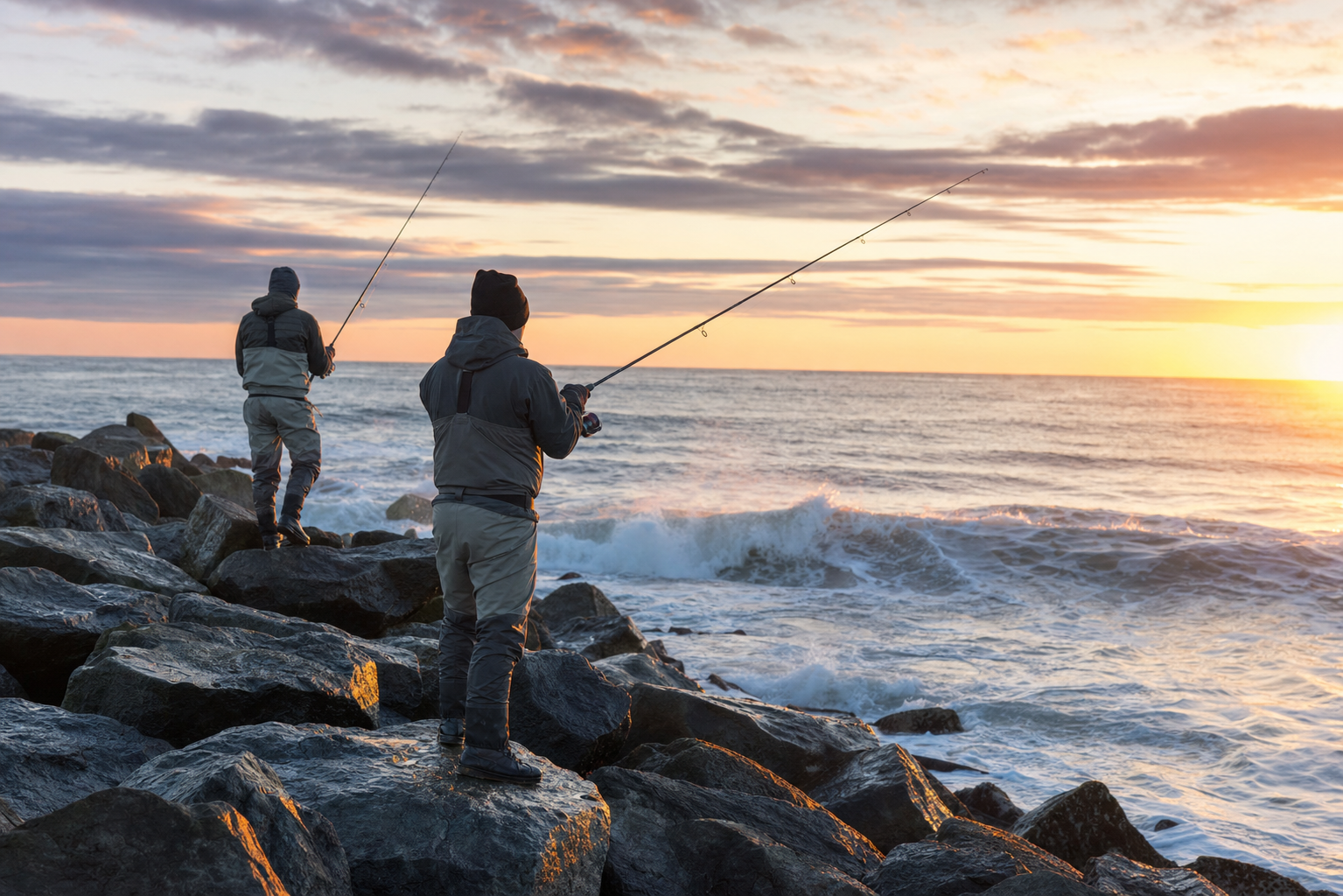
Quick take
After a heavy summer rain, do not rush straight to yesterday's spot. Check the marine forecast, tide stage, lightning risk, water clarity, inlet debris, and runoff color first. Then fish the first clean moving-water edge you can reach safely: ocean beach next to a flushed inlet, a channel shoulder with cleaner incoming water, or structure where bait has been pushed but not scattered.
Last checked July 6, 2026. Weather, access, water quality, and regulations can change quickly. Verify local marine forecasts, beach advisories, tide predictions, and state fishing rules before keeping fish or launching.
Heavy rain is one of the fastest ways to change a Northeast fishing day. A spot that looked perfect yesterday can turn brown, weedy, fresh, debris-filled, or unsafe after one strong line of storms. At the same time, rain can concentrate bait, cool skinny water, stain bright flats, push small forage out of creeks, and make predators feed hard when the water starts moving clean again.
That makes the first safe window after heavy rain a judgment test. The best anglers are not guessing whether the rain was “good” or “bad.” They are asking better questions: where is the cleanest water, where did the bait go, which tide will improve the situation, and can I leave safely if the next storm builds?
The National Weather Service marine program points anglers toward official coastal-water forecasts, warnings, observations, and point forecasts. NOAA Tides and Currents provides tide predictions and local water-level tools. NWS lightning and rip-current safety resources add the part anglers sometimes skip: if thunder, surf risk, or debris makes the access unsafe, the fishing plan waits.
Why heavy rain resets the bite
Rain does not affect every shoreline the same way. A steep ocean beach with a clean swell may recover quickly. A shallow back bay with storm drains, creek mouths, and warm water can stay dirty longer. A harbor may hold floating debris after a tide change. A jetty may fish well on one side and be unfishable on the other.
The important variables are practical:
- Water clarity: stained water can help daytime striped bass, bluefish, weakfish, and fluke ambush food, but chocolate water can make presentations disappear.
- Salinity: big freshwater pulses can push bait and fish away from upper creeks, canals, and shallow backwaters.
- Temperature: rain can cool hot flats and shorelines, especially after a July heat stretch.
- Current and tide timing: the first strong flush may be dirty; the next incoming may bring cleaner ocean water.
- Debris: logs, mats of weed, dock pieces, and trash can turn a boat run or surf wade into a bad idea.
- Access: flooded lots, cut-through beach paths, swollen creek crossings, slippery rocks, and high surf matter as much as the bite.
That is why the reset plan starts before the first cast.
The first safe surfcasting window
Surfcasters should think in edges after rain. Do not walk out just because the calendar says dawn or dusk. Walk out because you have a reason to believe clean water is meeting food.
Good post-rain surf targets include:
- the ocean side of an inlet after the outgoing has flushed and the next incoming starts cleaning the bar;
- a beach outflow where small bait, worms, grass shrimp, or rain-displaced forage gets swept into the wash;
- a rocky point with wind pushing stained water along one edge and cleaner water on the other;
- a breachway or groin field where current creates a defined seam instead of a uniform brown mess;
- a back-bay bank that drains shallow flats into a channel on the last of outgoing water.
The lure choice should match visibility. In moderately stained water, larger profiles, vibration, contrast, and slower presentations can help. Think darters, metal lips, bottle plugs, paddletails, bucktails, soft plastics with a visible tail kick, or a simple teaser-and-plug setup. In truly muddy water, the better move may be to relocate to cleaner water instead of changing lures ten times.
A simple surf rule
If you can see a clear seam, foam line, bait movement, or birds working within casting range, fish it methodically. If every cast comes back fouled with weed and the water looks the same from your boots to the horizon, move.
Use the site’s Northeast Fishing Trip Planner and Fishing Reports and Tides page to compare tide, wind, current reports, and marine forecast before burning the whole window at one dirty access point.
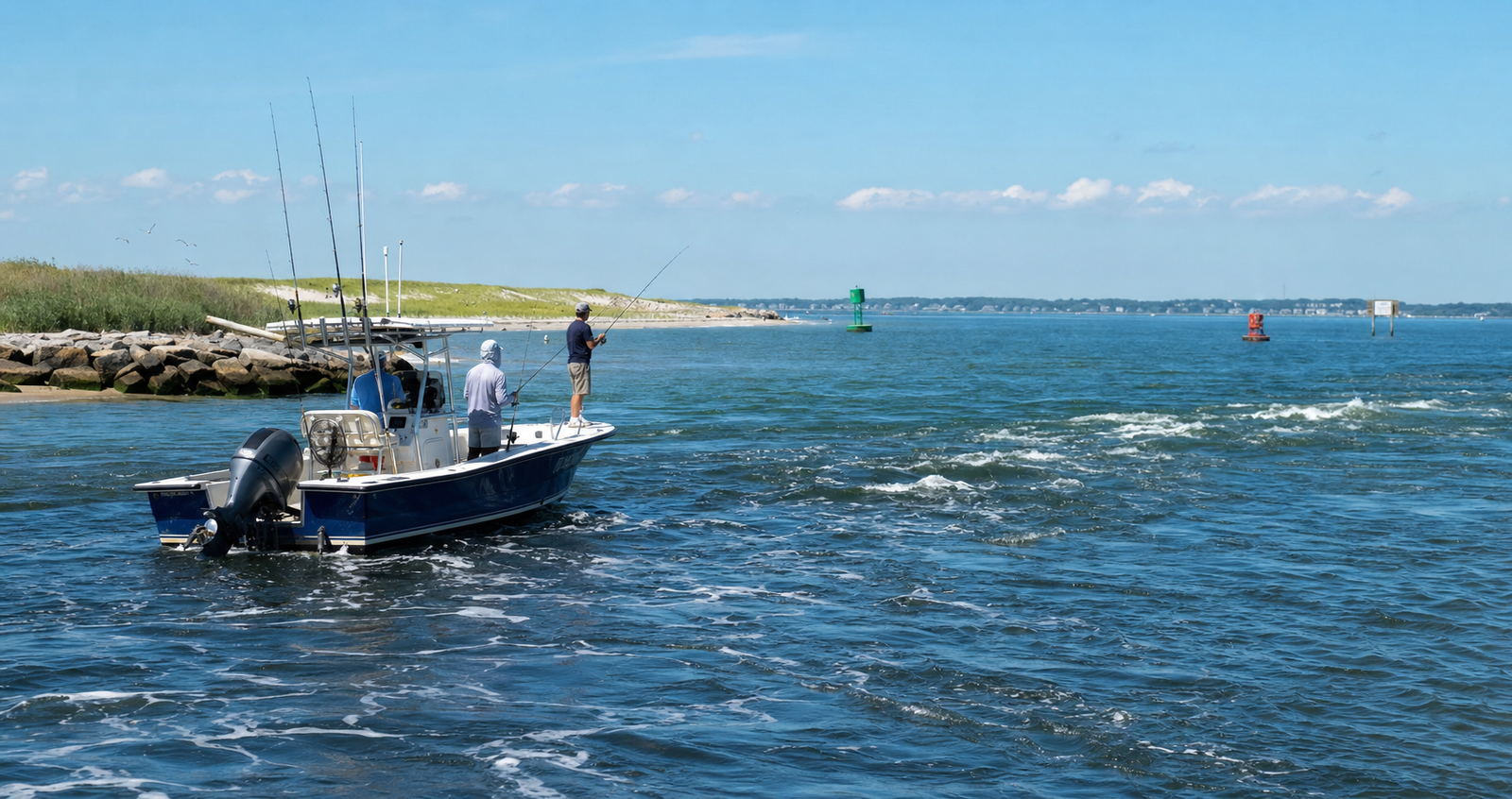
Boat anglers: inspect the run before trusting the waypoint
For boat crews, the post-rain issue is not only whether fish will bite. It is whether the ride, inlet, ramp, marina, and drift are clean enough to operate safely.
Before launching or leaving the slip, check:
- the latest NWS coastal waters forecast and any marine advisories;
- radar and lightning risk for the full run home, not only the first drift;
- tide stage at the inlet or ramp;
- floating debris in the creek, harbor, river mouth, or marina basin;
- visibility and fog after humid rain;
- whether runoff has made the planned back-bay zone too fresh or dirty;
- whether your backup ramp, harbor, or protected drift is actually usable.
For fluke, black sea bass, scup, striped bass, and bluefish trips, the first productive post-rain pattern is often not the most famous waypoint. It is a clean edge: an inlet shoulder, ocean-side lump, channel drop, reef edge, bridge shadow, or current seam where bait is being delivered to fish that can see and feed.
Drift control matters more after rain
Heavy rain often comes with wind shifts, swollen current, and floating weed. If you are bucktailing fluke, bouncing bait, jigging structure, or casting to birds, slow down the decision cycle:
- Make one clean pass.
- Watch the line angle, bottom contact, and debris load.
- Note whether bites come on the clean-water side, dirty-water side, or exact seam.
- Repeat the productive lane, not the whole general area.
- Leave if weeds, traffic, or weather make the drift sloppy.
A controlled 45-minute bite beats a three-hour argument with dirty water.
What to throw when the water is stained
Post-rain lure and bait decisions should be practical, not magical. Fish still need to find the meal, and anglers still need to present it naturally.
For striped bass and bluefish from the surf:
- use plugs or soft plastics with enough profile to stand out;
- slow down retrieves when visibility is limited;
- fish current seams instead of featureless dirty water;
- keep single hooks or crushed barbs in mind when bluefish are mixed in and quick releases matter;
- carry a headlamp and pliers, but do not stay exposed if storms rebuild.
For fluke and mixed-bag boat trips:
- use bucktails or rigs heavy enough to stay near bottom without dragging like an anchor;
- add contrast with chartreuse, white, pink, glow, or darker silhouettes depending on water color;
- tip with a strip bait or scented soft plastic when visibility is marginal;
- switch to sea bass, scup, or catch-and-release structure fishing if the fluke drift is all weed and shorts;
- measure and release fish cleanly according to current state rules.
For family fishing:
- choose protected access over heroic access;
- avoid swift storm drains, flooded bulkheads, slippery rocks, and high surf;
- fish smaller baits near docks, piers, canals, and calm banks only after water and weather are safe;
- keep kids away from steep washouts and moving water.
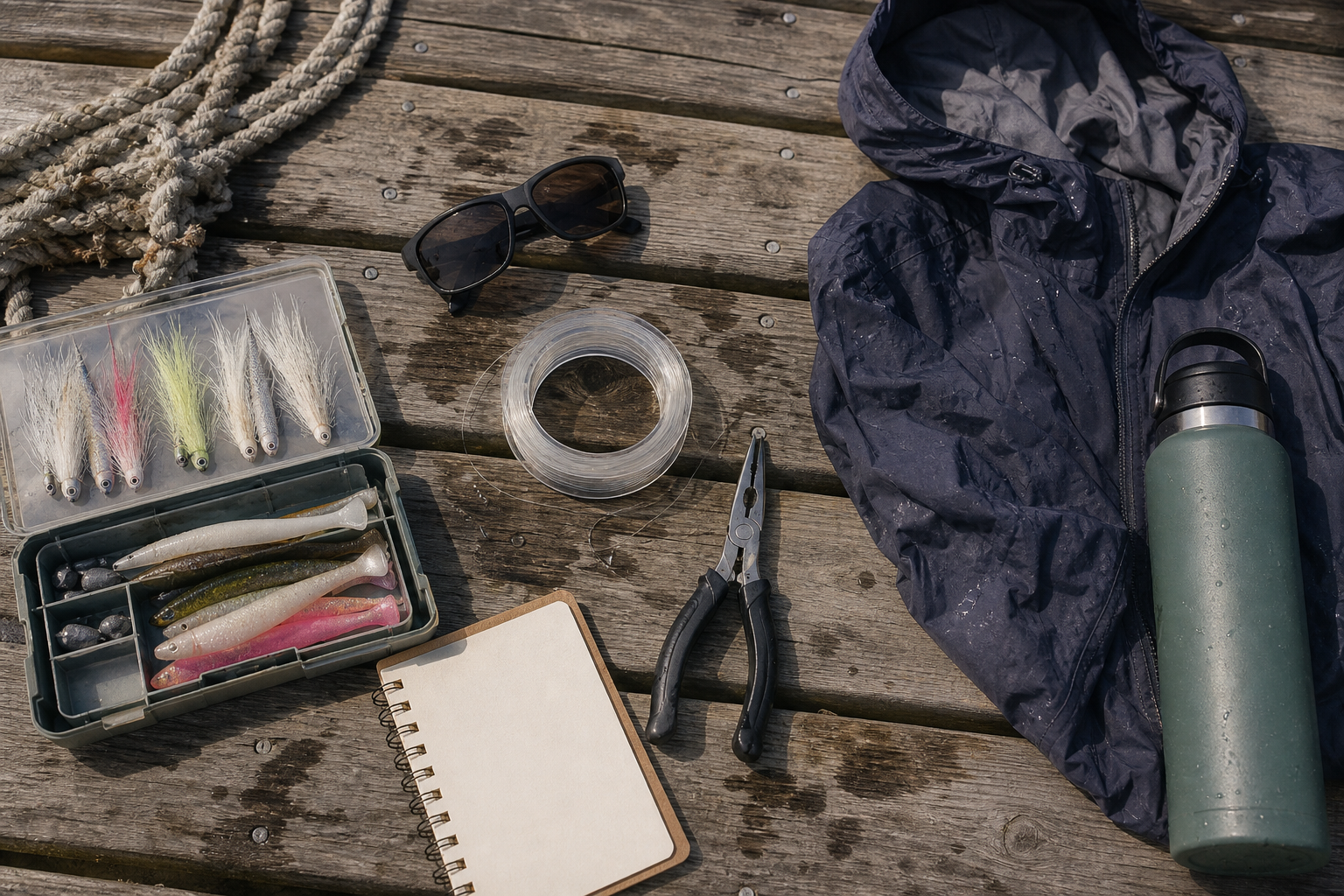
The 24-hour reset checklist
Use this before the next Northeast saltwater trip after heavy rain:
Before leaving home
- Check the NWS marine forecast for your actual zone.
- Check hourly radar and lightning timing.
- Review NOAA tide predictions for the nearest station.
- Look for local beach, water-quality, road, ramp, and access advisories.
- Confirm regulations for any fish you may keep.
- Pick one primary spot and one cleaner-water backup.
At the access point
- Look at water color before rigging.
- Watch for floating debris, weed mats, and unusual current.
- Check whether your exit path will stay safe on the next tide.
- Do not fish exposed rocks, jetties, piers, beaches, or open water if thunder is close enough to hear.
- If surf is elevated, respect rip-current risk and keep non-anglers away from the wash.
During the session
- Fish seams, drains, outflows, channel edges, and clean-water boundaries.
- Make presentations easier to find in stained water.
- Move if every cast fouls.
- Keep fish handling fast in warm weather.
- End early if radar, wind, lightning, or debris worsens.
Where this works around the Northeast
This pattern is useful from New Jersey through Long Island, Connecticut, Rhode Island, Cape Cod, Massachusetts, New Hampshire, and Maine because every region has rain-sensitive edges.
On Long Island, that may mean ocean beaches outside inlets, South Shore bay drains, North Shore harbor mouths, Sound-side drops, or East End rips. In Rhode Island and Connecticut, breachways, river mouths, reefs, and Sound structure can all change quickly after rain. Around Cape Cod and Massachusetts, the same logic applies to harbors, bays, boulder fields, canal-adjacent current, and ocean beaches. In Maine, watch river outflows, steep rock access, fog, tide height, and cold-water exposure even in summer.
The local name of the spot matters less than the checklist: clean enough, moving enough, safe enough, and holding food.
Final call
Heavy rain does not ruin every Northeast fishing trip. It removes lazy plans.
If you check the forecast, respect lightning and surf risk, verify tides, find the first clean moving-water edge, and carry a kit that can fish stained water without overcomplicating the day, the post-rain window can be one of the better summer opportunities.
If the water is unsafe, too dirty, full of debris, or boxed in by the next storm, let it reset. The best anglers know when the right move is not another cast; it is being ready for the next clean tide.
Plan the next tide: Start with the Northeast Fishing Trip Planner, then check Fishing Reports and Tides before choosing your surf, inlet, bay, or boat window.