
Field Note
The 90-Minute Tide Window: Why Striped Bass Suddenly Turn On in the Surf
A practical Northeast surfcasting field note on timing the short tide window when bait, current, light, and structure make striped bass feed hard.
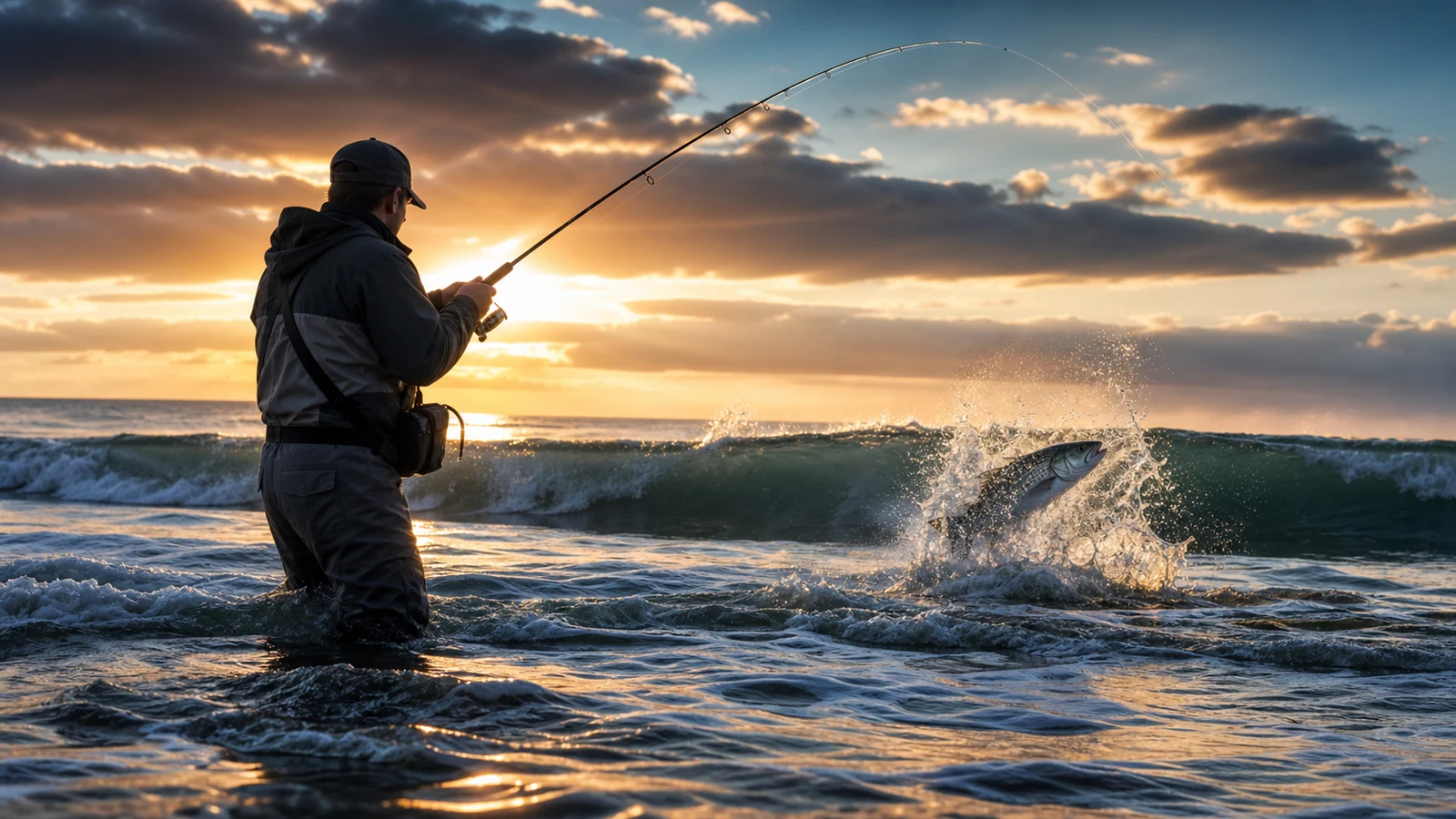
The short answer
Striped bass often feel like they appear out of nowhere because the best surf bite is not an all-night event. It is usually a short window when moving water, bait position, light, and beach structure finally line up. Call it the 90-minute tide window: the stretch when the ocean stops looking random and starts looking organized.
That window can happen on either side of high or low tide depending on the beach, inlet, wind, moon, and bait. The trick is not memorizing one magic tide. The trick is learning when a specific piece of water starts moving food past a specific ambush point.
The viral version: stop asking, "Is it high tide yet?" Start asking, "Where will bait be forced to make a bad decision in the next 90 minutes?"
Why 90 minutes matters
Surfcasters love big tide charts, but fish do not eat the chart. They eat what the tide does to bait.
A slow beach may look dead for hours. Then the current begins to slide across a bar, water drains out of a cut, whitewater stacks on a lip, or bait gets pinned against a drop. Suddenly the same cast that felt pointless 20 minutes earlier gets hit hard.
That is the 90-minute window. It is long enough to find a pattern, short enough to miss if you arrive late, and tight enough that one smart move can beat five random moves.
In the Northeast surf, this window often shows itself through a few signs:
- Baitfish flipping tight to the wash instead of scattered in open water.
- Birds making short, low passes rather than traveling.
- Whitewater repeatedly breaking over the same bar or trough.
- Current sliding sideways along the beach instead of pushing straight in.
- A sudden change in water clarity, foam lines, or surface nervousness.
- Small taps or missed bumps that quickly turn into committed strikes.
The point is not that every beach has the same 90 minutes. The point is that every productive beach has a moment when the tide gives predators an advantage.
The mistake that costs the bite
The most common mistake is fishing the whole tide at one speed.
Anglers arrive, clip on a lure, make the same cast for two hours, and leave right before the beach wakes up. Or they show up after a social post, see empty water, and assume the bite was random. It probably was not random. It was timed to a small change in current and bait position.
If you want to catch that change, fish the tide in phases.
Phase 1: the setup
Arrive early enough to watch the water before you need it to be good.
This is not wasted time. This is when you learn where the beach wants to feed. Stand back for a few minutes. Let your eyes adjust. Look for the boring details that become obvious once the tide starts pushing:
- Where does the first bar break cleanly?
- Where does the wave stop breaking?
- Where is the darkest trough?
- Where does foam move sideways?
- Where do small baitfish flash?
- Where would a tired baitfish get swept if it stopped swimming?
The setup phase is where you choose your starting lane. You do not need to cover a mile of beach. You need one piece of water that has a reason to concentrate food.
Phase 2: the switch
The switch is the first obvious sign that the water is no longer flat, lazy, or evenly spread out.
Maybe the outgoing tide begins pulling through a cut. Maybe the incoming tide finally reaches the back of a trough. Maybe the last hour of flood creates a sweep along a jetty pocket. Maybe sunrise or sunset takes away enough light that bait moves shallow.
When the switch happens, slow yourself down.
Most anglers get frantic when they see signs of life. Better move: make three disciplined casts to the exact place where food should pass. Change angle before changing lure. Change depth before changing size. Only change spots after the water gives you a reason.
Phase 3: the strike lane
The strike lane is the narrow path where the bass can feed with the least effort.
In the surf, that lane might be:
- The inside lip of a sandbar.
- The darker trough between two bars.
- The soft edge beside hard current.
- The down-current side of a point, groin, or jetty.
- The first clean water behind dirty wash.
- The pocket where bait gets pushed after a wave breaks.
This is where the article gets shareable because every angler has seen it happen: the whole beach looks alive, but the fish are only hitting in one lane. Two steps left or right can matter. Ten seconds of sink time can matter. The difference between a slow sweep and a fast retrieve can matter.
That is why the best surfcasters seem patient and aggressive at the same time. They are patient with the tide, aggressive with the exact lane.
The three-cast test
When a tide window opens, use a three-cast test before you start cycling through the whole plug bag.
First cast: land the lure slightly up-current of the lane and let it enter naturally.
Second cast: hit the same lane from a slightly different angle so the lure crosses the edge instead of running with it.
Third cast: change depth. Let a bucktail, soft plastic, or sinking swimmer get down before you move it.
If nothing happens, move your feet before you move your whole plan. A productive lane may be 20 yards away, not a new lure away.
What to throw when the window opens
The lure does not create the bite. It translates the moment.
Here is the simple version:
| Water signal | First move | Why it works |
|---|---|---|
| Bait dimpling high in calm water | Small swimmer, soft plastic, or subtle topwater | Matches nervous bait without overpowering the scene |
| Whitewater over a bar | Bucktail, darter, or bottle plug | Holds in broken water and gives bass a clear target |
| Strong sweep or inlet current | Bucktail, needlefish, or sinking plug | Stays connected and fishes the lane longer |
| Sand eels or tiny bait | Tin, teaser, slim soft plastic, or needlefish | Keeps the profile narrow and natural |
| Bigger bunker, herring, or mullet | Larger swimmer, pencil, popper, or metal lip | Shows a bigger meal when bass are keyed up |
If you are building the bag from scratch, start with the surf fishing gear guide and the tackle catalog. You do not need 80 lures to fish the window. You need a few tools that cover distance, depth, profile, and current.
The tide-window checklist
Before the trip, write down a simple guess:
- Which tide should move water across the structure?
- Where should bait get squeezed?
- What light change overlaps with that movement?
- What wind direction helps or hurts the setup?
- What lure covers the lane without fighting the water?
During the trip, update the guess:
- Did bait show where expected?
- Did the current form the lane?
- Did the first hits come before, during, or after the predicted window?
- Did fish hold tight to structure or chase in open wash?
- Did lure angle matter more than lure color?
After the trip, keep one sentence. Not a novel. One sentence.
“Outgoing started to pull across the inside bar 40 minutes after high, small bait pinned in the whitewater, hits came on a slow bucktail sweep.”
That sentence is worth more than a camera roll of grip-and-grin photos. It turns one bite into a pattern you can test again.
Why this feels like a secret
The 90-minute tide window feels like a secret because it rewards attention more than gear.
Two anglers can stand on the same beach. One sees waves. The other sees lanes. One waits for birds. The other notices bait getting nervous. One changes lures every few casts. The other changes angle by five degrees and lets the lure wash into the soft edge.
The difference is not mystical. It is observational.
Striped bass are built to use current. Baitfish are built to survive it. The surf is the stage where both are forced into the same narrow places. When that place appears, the clock starts.
A simple plan for the next tide
Pick one beach, inlet, bar, or point you already know. Do not chase the whole coast. Fish it around one predicted window and watch what the water does.
Bring a tight kit:
- One search lure for distance.
- One lure that holds in current.
- One subtle bait-matching option.
- One topwater for visible feeds.
- Pliers, light, leader, and a backup layer.
Use the Northeast coastal gear checklist if you want the broader prep list. Check the tide dashboard before you leave, then use your eyes once you arrive.
Do not miss the window because you dressed wrong
The 90-minute bite often overlaps the coldest, darkest, wettest part of the trip. If the plan includes rocks, sweep, waders, or a long walk back, use the Patagonia waders and boots path, the Patagonia rain jacket path, and the Patagonia cold-layer path before you leave.
The goal is not to be perfect. The goal is to be there when the water makes sense.
The takeaway
The best surf bite rarely feels fair when you hear about it after the fact. Someone says, “They turned on for an hour,” and it sounds like luck.
Sometimes it is.
More often, it is the tide window doing exactly what it does: moving bait through a place where striped bass can feed efficiently. Learn to spot that 90-minute change and the beach gets smaller, louder, and a lot more interesting.


