
Field Note
NY Fluke Size Bump Is Coming: A July Plan for Fluke and Black Sea Bass
New York's 2026 fluke size limit rises on Aug. 2. Here's a practical July plan for Long Island anglers targeting legal fluke and black sea bass before the window changes.
The quick take
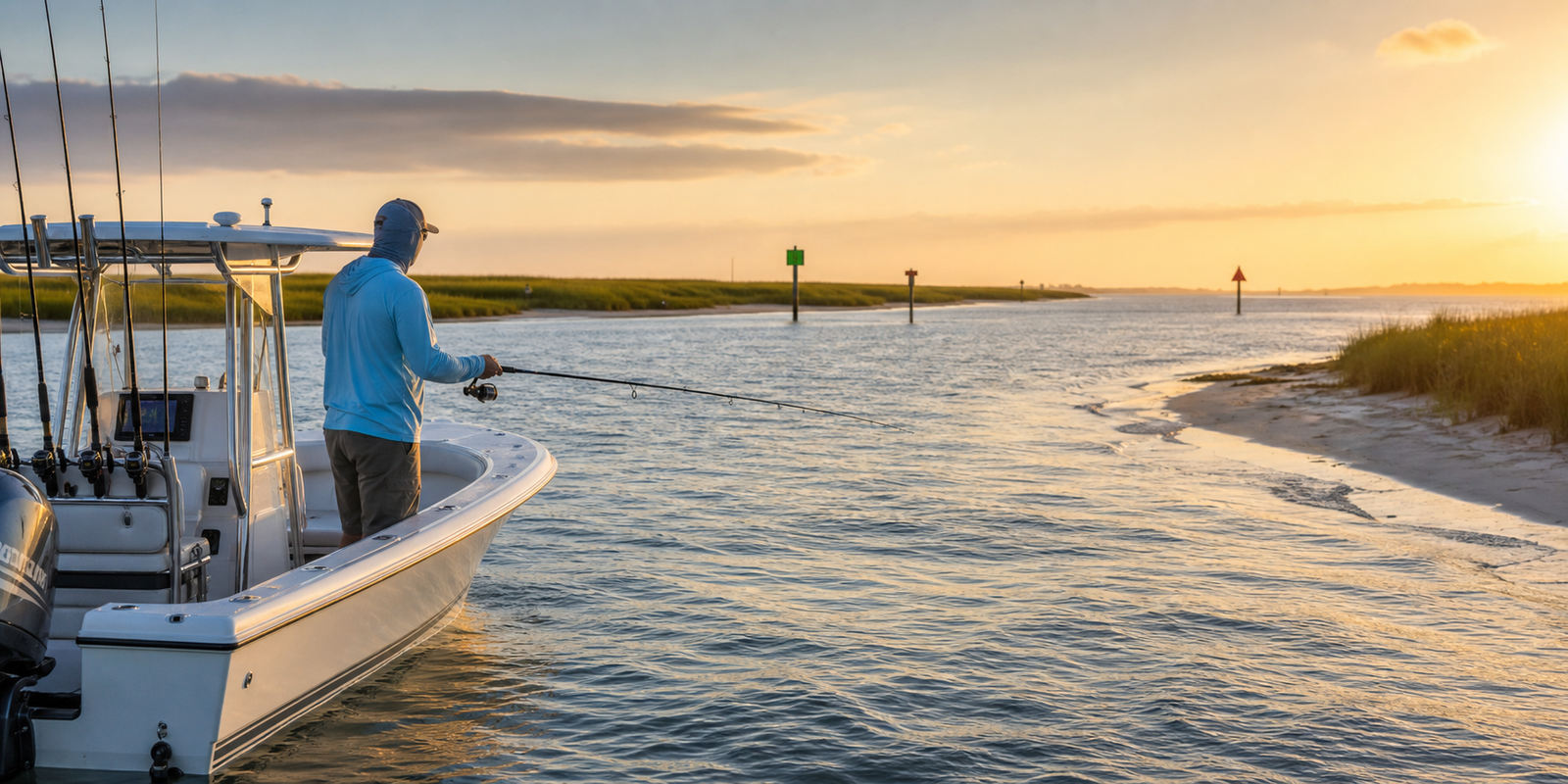
New York’s summer flounder season has a practical midseason wrinkle in 2026: the listed recreational minimum size is 19 inches from May 4 through Aug. 1, then 19.5 inches from Aug. 2 through Oct. 15, with a 3-fish possession limit. New York DEC’s saltwater regulation page also lists black sea bass at 16 inches, with 3 fish from May 16 through Aug. 31 and 6 fish from Sept. 1 through Dec. 31.
For Long Island and nearby New York saltwater anglers, that makes July a planning month. The goal is not to panic-fish before Aug. 2. The goal is to use the current size window intelligently: fish the right bottom, keep the first truly legal fish honest on the ruler, release borderline fish cleanly, and build trips that can pivot from fluke drifts to black sea bass structure when conditions cooperate.
Planning rule: in July, make the fluke drift first, then keep one legal black sea bass option nearby if wind, tide, or short-fish ratios make the channel edge unproductive.
Why this matters now
Regulation changes do not catch fish by themselves, but they change trip decisions. A half-inch bump can turn a fish that was dinner last week into a clean release next week. It can also change which spots make sense: areas that produce steady 17- to 18.5-inch fluke may be fun, but they become weaker meat-trip bets as the minimum increases.
New York DEC says its recreational saltwater limits were last changed on May 12, 2026, and anglers should treat the official state page as the source of truth before keeping fish. NOAA Fisheries’ species pages give the bigger fisheries context: summer flounder are managed in state and federal waters, and black sea bass are strongly tied to structured habitat such as reefs, wrecks, oyster beds, and other hard bottom.
That combination points to a practical July strategy: fish sandy and mixed-bottom edges for quality fluke while keeping enough structure in the plan to salvage the tide with sea bass, porgies, or catch-and-release action if the doormats do not show.
The July Long Island fluke plan
1. Start with water movement, not yesterday’s screenshot
Fluke are ambush feeders. They do not need a ripping current every minute, but they usually need enough drift to move bait naturally across the bottom. Before choosing the ramp, check the tide window, wind direction, and sea state. A perfect waypoint is not perfect if wind against tide makes the boat spin or if the drift speed turns every presentation into a dragging anchor.
A useful July order of operations:
- Pick the tide you can actually fish safely.
- Check NOAA tide predictions for the nearest station and the National Weather Service marine forecast for wind, thunderstorms, and sea state.
- Choose two or three depth bands, not ten random spots.
- Start where bait can get pinned: channel shoulders, bay mouths, inlet-adjacent flats, ocean-side lumps, and edges where sand meets broken bottom.
- Move only after you have tested a clean drift from up-current to down-current.
This is where a Long Island trip can beat a generic report. South Shore bay mouths, ocean reefs, Sound drops, North Fork rips, and East End structure all fish differently. The common thread is not the name of the spot; it is whether food is moving past a legal-sized fluke.
2. Fish bigger meals when shorts dominate
If every drift produces taps from short fish, do not simply keep repeating the same pass. Adjust toward a presentation that makes smaller fish less efficient.
Practical July moves:
- Use a heavier bucktail or sinker only if it improves bottom contact; do not overpower the presentation for no reason.
- Add a teaser when fish are aggressive, but remove it if doubles of shorts slow down the process.
- Try a larger strip bait or longer soft plastic to select for better fish.
- Shift to the deeper edge of the same structure before abandoning the area.
- Make a short run to a similar edge with cooler, cleaner, or less-pressured water.
The point is not that large bait magically eliminates shorts. It does not. The point is that a quality-fish plan should stop rewarding only the smallest mouths in the area.
3. Measure early and do not play games with borderline fish
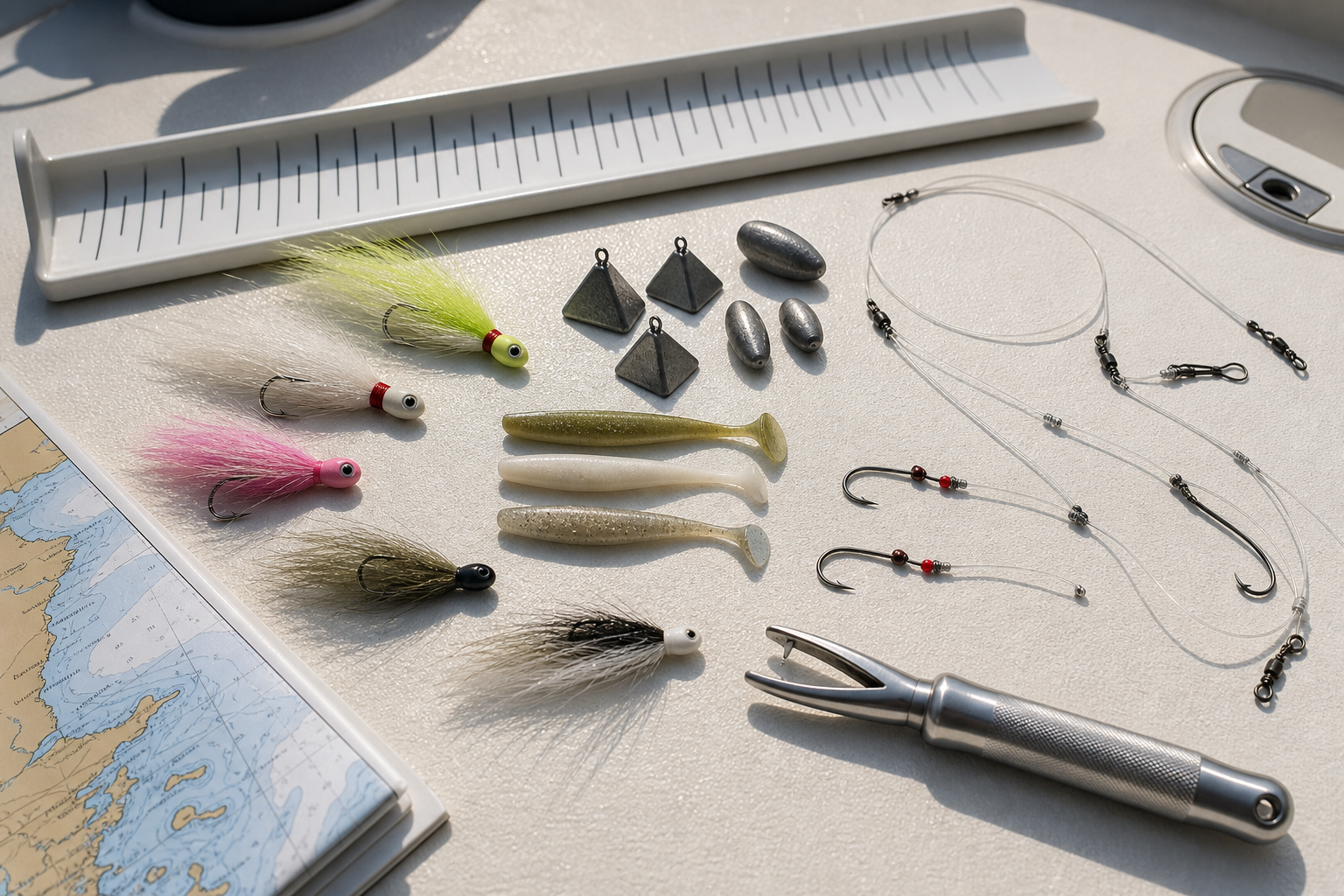
The size bump makes measuring discipline more important. A fish that barely touches the line when it is curved, pinched, or bouncing on a wet deck is not a confident keeper. Use a flat board, close the mouth naturally, pinch the tail only if your state rule requires or allows that method, and release questionable fish fast.
That habit protects anglers too. It avoids arguments at the dock and keeps the trip from becoming a regulation gamble. If the boat is catching a lot of borderline fish, the better answer is to change the drift or target mix, not to stare harder at the ruler.
Where black sea bass fits
Black sea bass should not be treated as an afterthought in July. They are often the best way to turn a slow fluke trip into a productive boat day, especially when wind makes precise drifting difficult.
NOAA describes black sea bass as a structure-oriented species. For anglers, that means reefs, wrecks, rock piles, mussel beds, artificial reefs, and hard-bottom transitions deserve attention. The tradeoff is simple: the better pieces are often more obvious and more pressured. A small, less-famous bump near a good fluke lane may be more useful than a crowded wreck everyone has already hit.
Structure strategy for mixed trips
A smart mixed fluke/sea bass plan has three layers:
- Primary drift: a sand or mixed-bottom edge where legal fluke are plausible.
- Nearby hard bottom: a reef, wreck, rock patch, or artificial structure within a reasonable run.
- Bailout water: a protected bay, harbor edge, pier, or porgy/snapper option if wind or storms build.
This keeps the day from becoming all-or-nothing. If the fluke drift is clean, stay with it. If it turns into short-fish purgatory or the wind makes presentation sloppy, slide to structure and fish vertically.
Tackle changes that matter
For fluke, most July boat anglers are trying to balance bottom contact with natural movement. For sea bass, the priority changes: stay close to structure without donating tackle every drop.
Useful switches:
- Move from a single bucktail to a high-low rig when you are fishing directly over rough bottom.
- Keep leader material and hooks appropriate for abrasion around wrecks and rock.
- Use enough weight to hold bottom vertically; dragging through the wreck is a snag recipe.
- Carry a dehooker and pliers where they are reachable, not buried under the cooler.
- Bring a measuring board that handles both fluke and sea bass cleanly.
Shore anglers can still use the same logic
This is not only a boat article. Shore anglers fishing inlets, docks, bulkheads, canal edges, piers, and bridge-adjacent current can apply the same structure-first thinking.
For shore fluke, focus on:
- Clean sand lanes near current.
- Edges where bait gets swept past a point, bar, or dock shadow.
- Light bucktails or rigs that maintain contact without plowing.
- Low-light windows when boat traffic is lower and water may be cooler.
For sea bass from shore, access is more limited and local rules matter. Jetties, rock piles, and inlet structure can produce, but safety comes first. Wet rocks, boat wakes, thunderstorms, and night fishing all raise the risk. If the footing is bad, the better choice is a safer dock, pier, or protected shoreline trip.
A practical July trip template
Use this as a starting framework, then adjust for your port and conditions.
Before leaving home
- Check the official New York DEC saltwater regulations page for fluke, black sea bass, striped bass, bluefish, scup, and any species you may keep.
- Check NOAA tide predictions for your launch or nearest station.
- Check the National Weather Service marine forecast for wind, thunderstorms, fog, and sea state.
- Decide whether the day is a fluke-first, sea-bass-first, family-action, or scouting trip.
- Pack sun protection, rain gear, water, a charged phone, and enough ice if you intend to keep fish.
On the first drift
- Start up-current of the edge so the bait fishes before the boat reaches the best contour.
- Watch drift speed and angle; bad boat control can make a good area look dead.
- Mark only useful information: legal fish, bait, clean bites, snags, and depth changes.
- Give the area enough time to prove itself, but do not burn the whole tide on one unproductive lane.
When the bite stalls
- Change depth before changing the whole plan.
- Change bait size before blaming the location.
- Switch from drifting to vertical structure fishing if wind or tide makes fluke presentation poor.
- Keep a family-friendly option in reserve if the trip includes kids or casual anglers.
Conservation and release quality
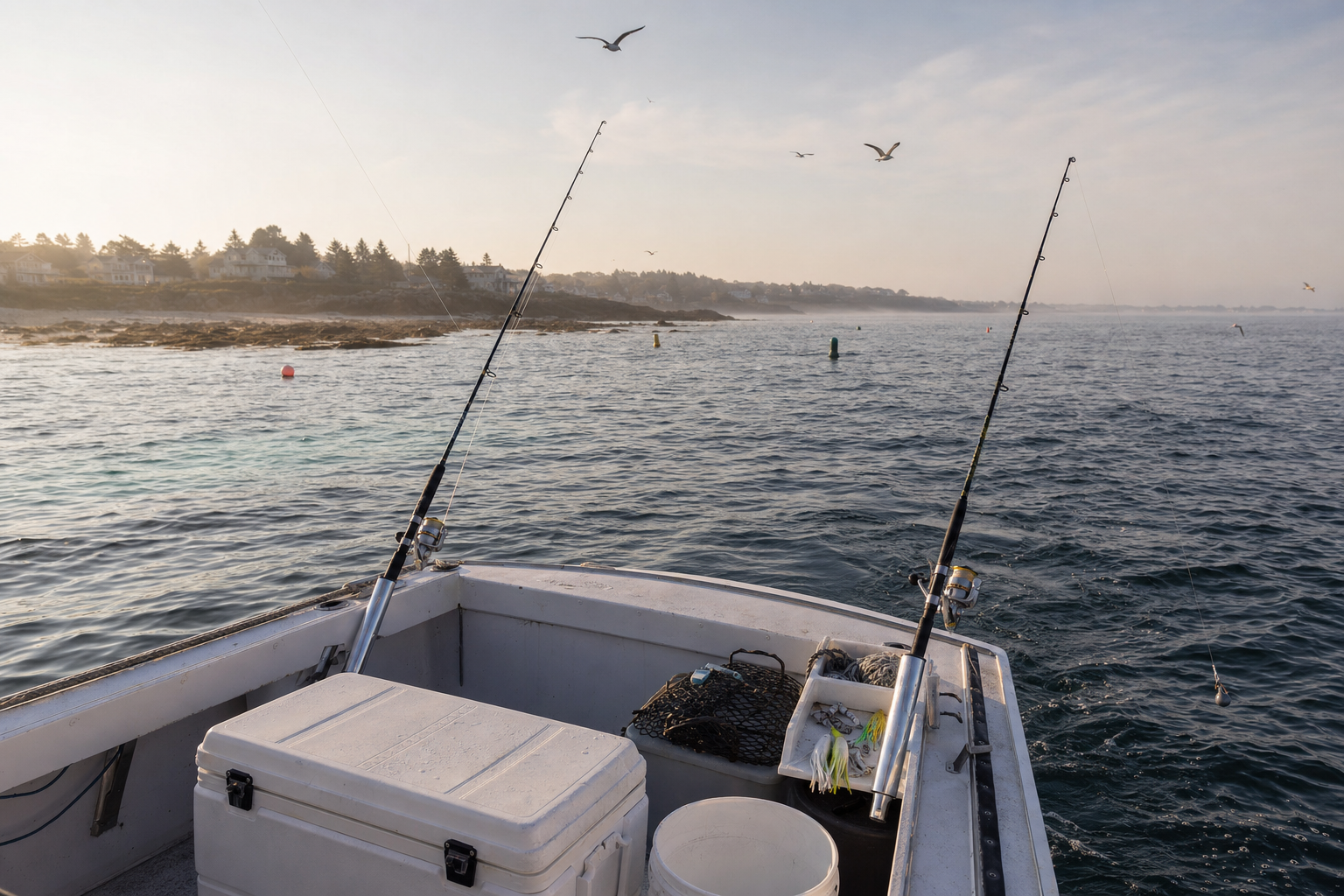
A regulation-aware trip is also a release-quality trip. July heat, warm deck surfaces, and repeated short-fish handling can beat up fish quickly. Keep fish in the water or on a wet surface when possible, use tools that shorten handling time, and release shorts before photos become the point of the trip.
For striped bass bycatch, be especially conservative. New York lists the marine striped bass slot at 28 to 31 inches with a 1-fish possession limit during the marine season, but many July bass are better treated as a quick-release target in warm, low-oxygen conditions. If bass are part of the plan, fish lower light, use appropriate tackle, and stop targeting them if releases look poor.
Internal links for planning the trip
If you are building this weekend’s plan, start with these SteveFraney.com resources:
- Long Island Fishing Guide for regional access and seasonal context.
- Northeast Fishing Trip Planner for tides, weather, reports, and trip checks.
- Boat Fishing Gear for small-boat safety, storage, and day-trip setup.
- Surf, Inshore, and Offshore Tackle Catalog for bucktails, rigs, tools, terminal tackle, and storage.
- Saltwater Rods and Reels for matching rods and reels to fluke, sea bass, surf, and inshore work.
Bottom line
The New York fluke size change on Aug. 2 is not a reason to rush or bend the rules. It is a reason to fish smarter in July. Build trips around quality fluke water, keep a black sea bass structure option in the plan, measure fish cleanly, and verify the official regulations before anything goes in the cooler.
The best July anglers are not the ones with the loudest report. They are the ones who can look at tide, wind, structure, and the rule card, then make the next right move.
CTA: Before your next Long Island saltwater trip, use the Northeast Fishing Trip Planner and then match your route with the tackle catalog so the boat is ready for both fluke drifts and sea bass structure.
Sources consulted
- New York State Department of Environmental Conservation, “Recreational Saltwater Fishing Regulations”.
- NOAA Fisheries, “Recreational Fishing Regulations by Species”.
- NOAA Fisheries / FishWatch, “Summer Flounder”.
- NOAA Fisheries / FishWatch, “Black Sea Bass”.
- NOAA Tides & Currents, “Tide Predictions”.
- National Weather Service, “NOAA NWS Marine Weather Services”.