
Field Note
July Thunderstorm Fishing Plan for Northeast Anglers
A practical Northeast saltwater fishing plan for July pop-up thunderstorms: tide-window decisions, lightning safety, boat bailouts, surf access, rip currents, and storm-ready gear.
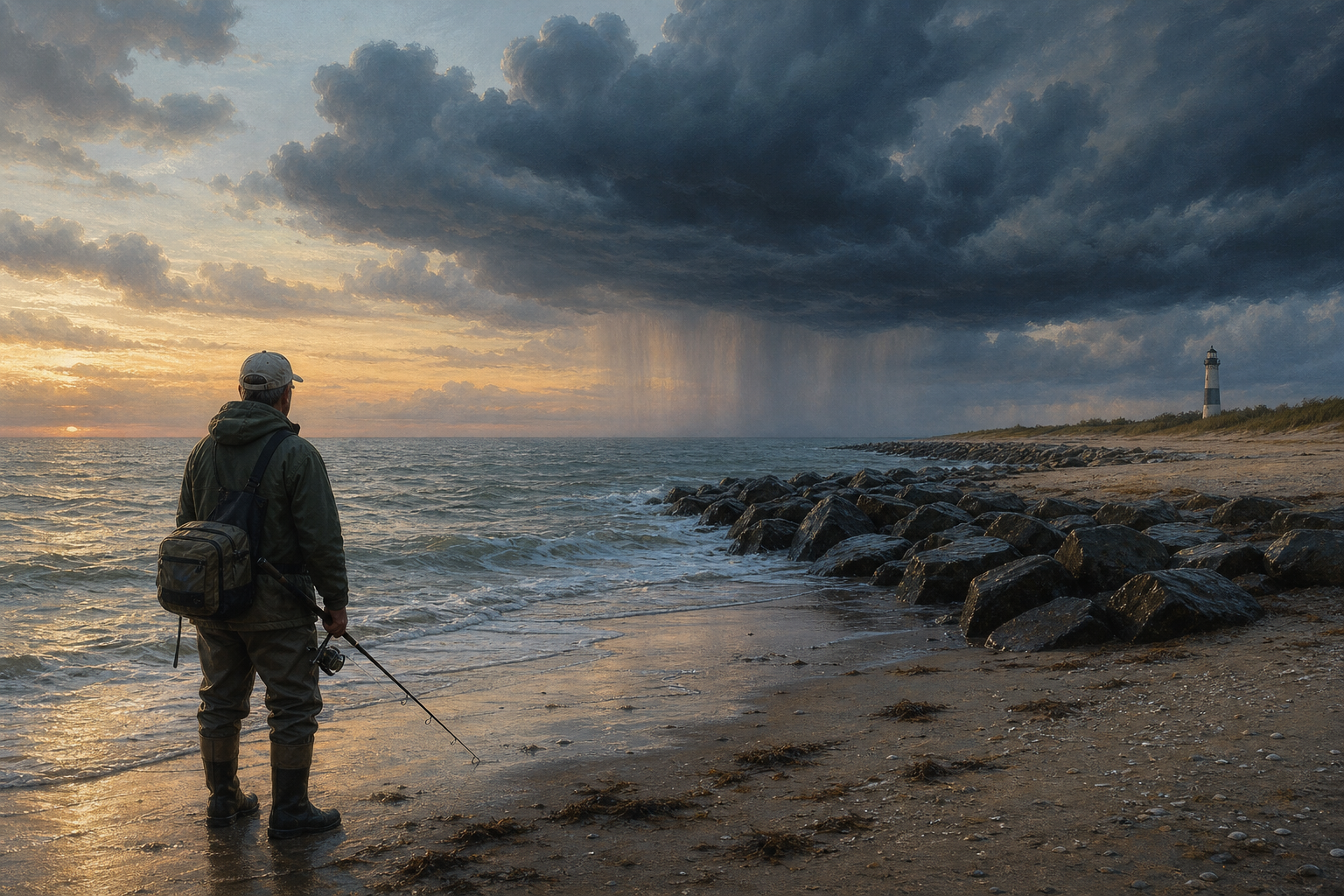
Quick take
July fishing in the Northeast rewards anglers who treat thunderstorms as a trip-planning factor, not an interruption. Pick one tide window, check the marine and hourly forecast before leaving, identify the fastest safe exit, and do not stay on beaches, jetties, ramps, or open water once thunder is close enough to hear.
Summer saltwater fishing in the Northeast can look perfect right up until it is not. A July morning can start with clean tide, bunker dimples, fluke on a channel edge, and barely enough wind to ripple the bay. By midafternoon, the same trip can turn into a hard southwest push, stacked beach crowds, dark clouds over the Sound, a rough inlet, and lightning moving faster than the bite.
That does not mean anglers should stop fishing July. It means the plan has to be tighter.
The National Weather Service lightning, rip-current, boating, heat, and marine-safety resources all point toward the same operational idea: check conditions before exposure, keep a conservative exit available, and do not treat water access as shelter. For Northeast anglers chasing striped bass, bluefish, fluke, black sea bass, scup, and family pier action around the Fourth of July stretch, that advice becomes a practical fishing system.
Here is the storm-aware plan: fish the best moving-water window, build a bailout before the first cast, and make the weather decision before the weather makes it for you.
Why July thunderstorms change the fishing plan
July storms are different from a cold, steady spring rain. They can be localized, fast, electrical, and tied to heat, humidity, sea-breeze boundaries, frontal edges, and afternoon instability. A beach ten miles away may stay clear while your inlet gets dark. A back-bay drift can feel safe until the exit ride turns directly into wind, rain, and a crowded ramp.
For fishing, the pattern creates two truths:
- There may be a good bite before or after a change. Current, cloud cover, pressure shifts, bait movement, and reduced light can all make fish more aggressive.
- The bite is not worth being the tallest object on a jetty, beach, pier, kayak, skiff, or open deck.
That second point controls the whole article. Storm fishing is only smart when the dangerous part of the storm is not on top of you.
The 90-minute decision beats the all-day hope
A lot of July trips fail because the plan is too big. Anglers leave home thinking, “We’ll fish all day and adjust.” That is how people end up making weather calls while already exposed.
A better Northeast summer plan is built around a short, specific target:
- one dawn or dusk striper tide;
- one protected fluke drift before the wind comes up;
- one family pier session before the beach crowd and afternoon storms;
- one evening bluefish or bass window after the weather clears and the radar supports it.
Use the SteveFraney.com Northeast Fishing Trip Planner and Fishing Reports and Tides page to stack the basic checks: tide, wind, marine forecast, access, parking, current reports, and backup water.
Surfcasters: do not let a storm trap you on structure
Surfcasters love edges: inlet lips, boulder fields, groins, jetties, breachways, cuts, bars, and bridge shadows. Those same places can become bad places to be when storms get close.
A wet jetty is already a fall hazard. Add wind, rain, low visibility, spray, slippery weed, and lightning risk, and the smart move is not to switch lures. It is to leave early enough that leaving is still easy.
A storm-aware surfcasting checklist
Before walking away from the truck, answer these questions:
- Can I see the sky where weather is coming from, or am I blocked by dunes, houses, bluffs, or a point?
- Is my exit dry at this tide, or will rising water cut off a bar, rock path, creek mouth, or low beach?
- How long does it actually take to get back to the truck in waders, korkers, or soft sand?
- Is there a safer beach, back-bay bank, pier, or canal option if the open surf is wrong?
- Do I have a hard stop, or am I counting on “one more cast”?
If thunder is close enough to hear, the fishing decision is over. Leave exposed water, beaches, jetties, and piers and get to a substantial shelter or vehicle. The common National Weather Service rule is to wait at least 30 minutes after the last thunder before resuming outdoor activity.
That can feel conservative when fish are showing. It is still the right standard.
Boat anglers: pick the exit before the drift
Boat fishing adds a second clock: the time it takes to get home. A beach angler may be ten minutes from the truck. A small-boat crew might be a long idle from the ramp, a rough inlet away from the bay, or twenty minutes from the nearest protected harbor.
That means the best July boat plan starts with the bailout, not the first waypoint.
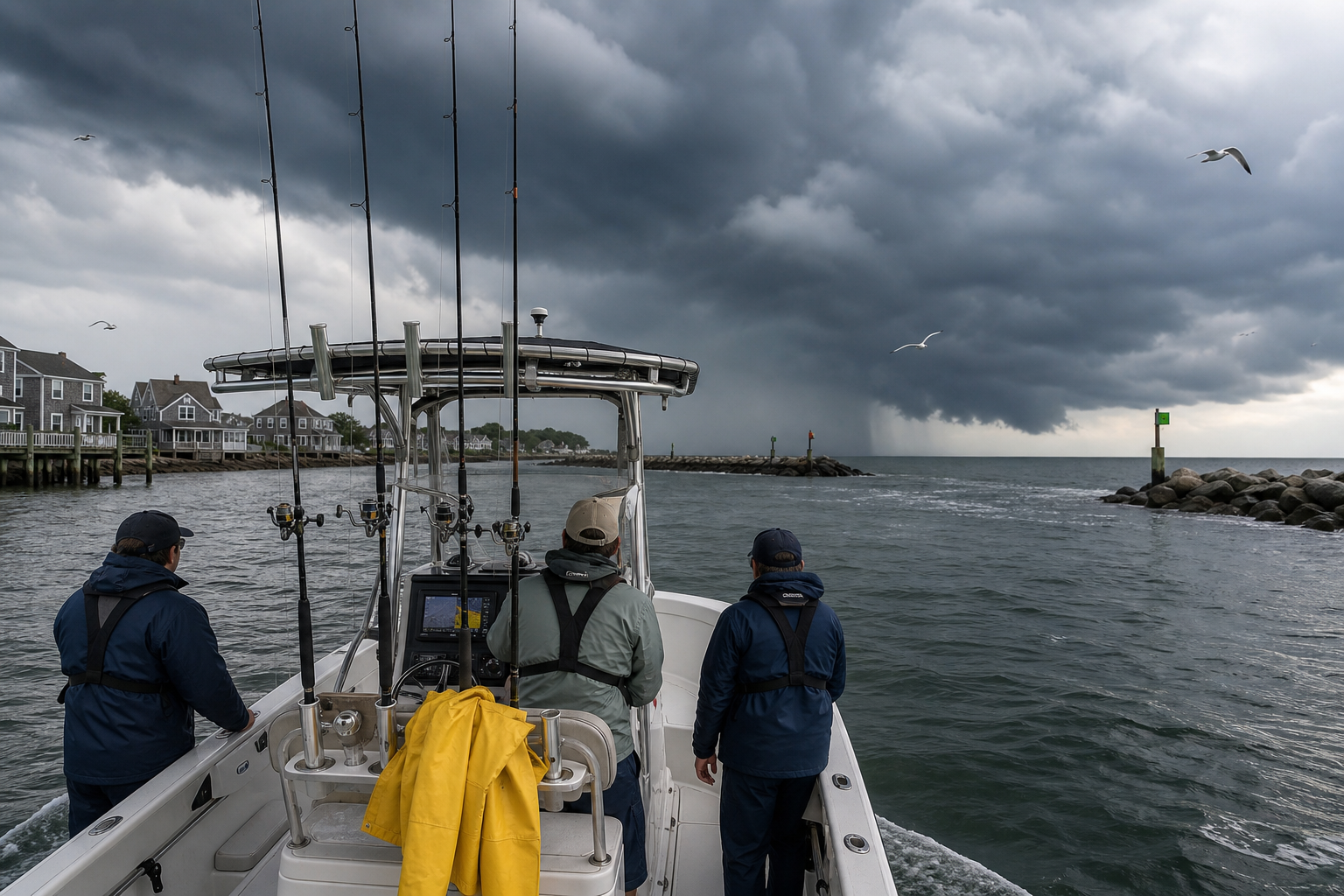
Build a July boat-day bailout
Before running to a reef, rip, wreck, fluke edge, or black sea bass piece, make the conservative version of the plan:
- Check the marine forecast before launching. The National Weather Service marine forecast should be part of the dock routine, not something checked after clouds build.
- Decide the protected-water option. If the outside piece gets questionable, know the bay, harbor, river, lee shoreline, or no-go point.
- Keep safety gear usable. PFDs, VHF, phone in dry storage, navigation lights, bilge pump, throwable device, first-aid kit, and rain gear should not be buried under tackle bags.
- Secure loose gear early. Rods, nets, tackle trays, buckets, and knives become problems when the ride turns wet and fast.
- Leave before the ramp rush. If every boat waits for the same dark line, the ramp becomes part of the hazard.
For small boats, the winning decision is often boring: fish the early tide, slide to protected water when wind stacks up, and quit before the squall line has a vote.
Rip currents, beach crowds, and fishing around swimmers
July storm systems can also change beach water. Wind, swell, tide, sandbar cuts, and storm surf can all increase rip-current risk. The National Weather Service rip-current guidance is written for swimmers, but surfcasters and family fishing groups should pay attention too.
A strong rip can turn a simple beach session into a rescue environment. It can also change where bait, weed, shells, and small fish collect. The fishing may look tempting right where the water is most complicated.
Practical beach rules for anglers
Use these rules when fishing crowded summer beaches:
- Do not cast around swimmers, surfers, paddleboards, or guarded swim zones.
- Treat cuts, outflows, sweep, and deeper troughs as both fish-holding water and hazard zones.
- Keep kids out of the wash when surf is steep, dirty, or storm-influenced.
- Do not wade deep just to reach fish; July water can still knock an angler down hard.
- Know the public access rules, night restrictions, beach-driving rules, and parking deadlines before you start.
If the beach becomes a safety scene, stop fishing and make room. No fish is worth adding hooks, line, trucks, or confusion to a rescue area.
What to pack when storms are possible
A thunderstorm-aware fishing kit is not complicated. It is a normal Northeast summer kit with the safety and exit pieces moved to the top instead of buried under extra lures.
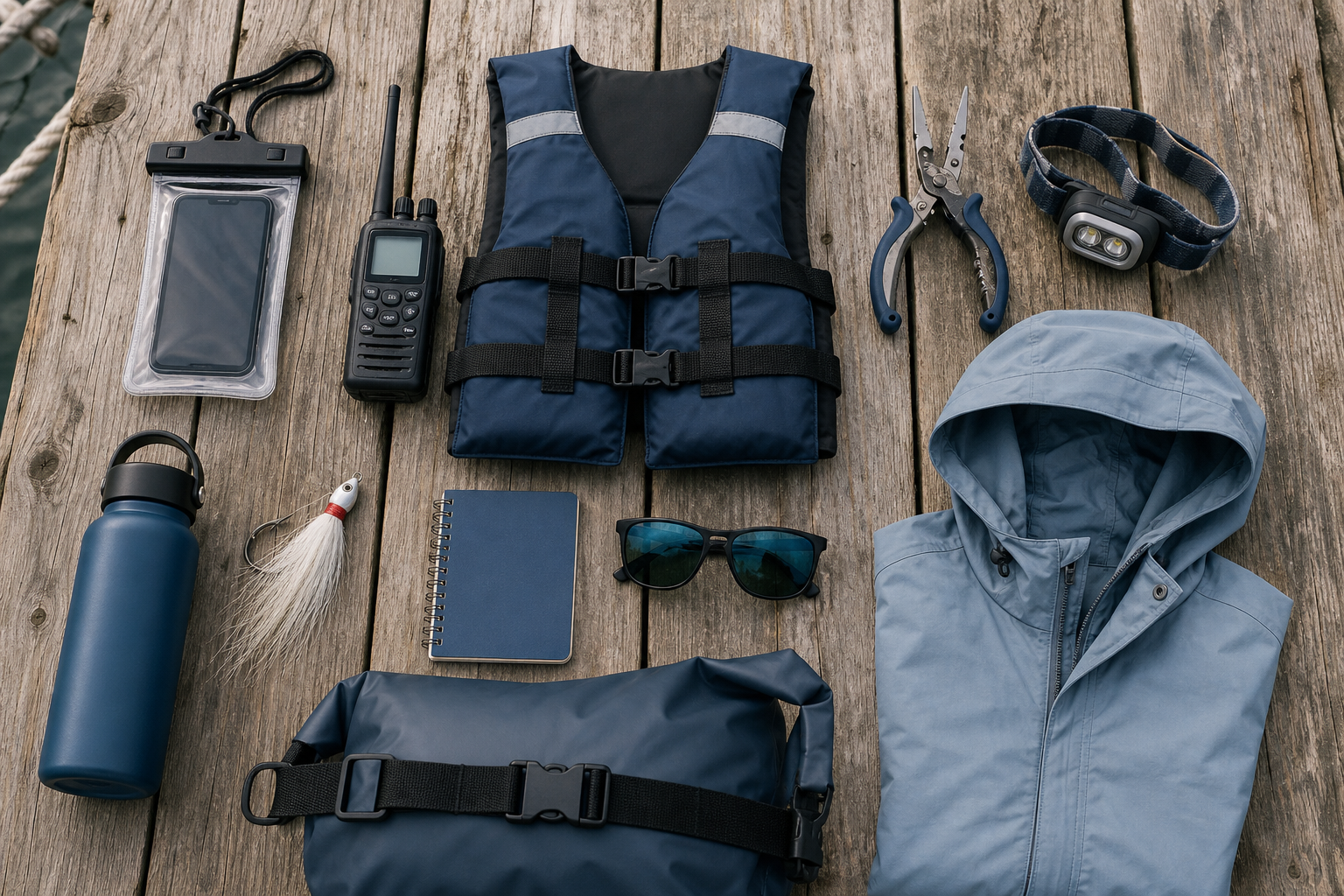
Surf and shore kit
- Lightweight rain shell or packable jacket
- Headlamp, even for “just before dark” trips
- Phone in waterproof storage
- Pliers and leader cutter on your body, not in the truck
- Wading belt if wearing waders
- Studded footwear where rocks require it
- Small first-aid kit
- Water bottle and sun protection
- Dry bag for keys and wallet
- A simple lure selection that lets you move quickly
Boat and kayak kit
- Properly worn PFDs
- VHF radio or reliable communication plan
- Phone in waterproof storage
- Navigation lights and charged electronics
- Rain shell and warm layer for the ride back
- Throwable device and required safety gear
- Bilge check or kayak pump/sponge where appropriate
- Knife, pliers, and line cutter within reach
- Dry bag for essentials
- A clear “turn around now” threshold
For apparel and boat-day setup, SteveFraney.com already has deeper guides for fishing rainwear and bibs, boat fishing gear, sun protection, and fishing apparel. The storm version of the kit is about access: the gear only helps if you can reach it when the weather changes.
How to fish around storms without pretending to control them
Storm-aware fishing is not about chasing lightning or trying to outsmart the radar. It is about using safe windows around changing weather.
Before the storm window
If forecast timing, radar, and local sky support it, the period before weather arrives can be productive. Fish close to the exit. Avoid long walks, exposed jetties, remote bars, and offshore runs. Use presentations that cover water efficiently: bucktails, soft plastics, swimmers, metals, epoxy-style baitfish profiles, or simple bottom rigs where appropriate.
For fluke and sea bass trips, choose a drift where the ride home is simple if wind shifts. For striped bass and bluefish, prioritize moving water near safe access instead of the farthest rock in the county.
After the storm clears
The post-storm window can also be useful, especially when cloud cover, cooler air, and moving water line up. But “cleared” has to mean more than “the rain stopped.” Wait out thunder properly, check the next cell, and look at the water before stepping back in.
After a storm, expect dirty water, weed, changed sweep, fresh debris, slick rocks, flooded parking areas, and stronger currents around drains and inlets. In some places the better move is to scout for the next tide instead of forcing the current one.
The regulation check still matters
Storms and short windows create hurry, and hurry creates sloppy keeper decisions. Do not let the cooler decision become an afterthought.
Northeast mixed-bag trips can move through striped bass, bluefish, fluke, black sea bass, scup, weakfish, and other species across state waters, federal waters, shore access, and vessel rules. Use primary sources first: NOAA Fisheries regional recreational regulation links and your state marine fisheries agency. New York anglers should verify NY DEC recreational saltwater rules; Rhode Island, Connecticut, Massachusetts, New Jersey, Maine, and other Northeast anglers should check their own official pages before keeping fish.
If the weather compresses the trip, simplify the harvest plan too: measure carefully, know the season and possession limit before the first keeper, and release fish quickly when you are not keeping them.
A simple July storm plan by angler type
Long Island or New England surfcaster
Fish the best low-light moving-water window near an easy exit. Avoid exposed jetties when storms are possible. Carry fewer plugs, keep tools on your body, and leave at the first thunder threshold instead of walking out farther because the water looks good.
Small-boat fluke or sea bass crew
Launch early only if the marine forecast supports it. Fish the closest productive structure first, keep the drift controlled, and decide the protected-water option before leaving the ramp. If the afternoon looks unstable, plan to be back before the crowd and weather collide.
Family pier, dock, or beach group
Make the trip short, simple, and close to shelter. Bring water, sun gear, rain shells, and a clear stop time. If storms are possible, choose a location where leaving is easy and bathrooms, parking, and shelter are realistic.
Weekend traveler
Do not book the whole day around one beach, one charter idea, or one ramp when the forecast is unstable. Build a two-location plan: primary fishing window plus a sheltered backup, tackle-shop stop, seafood lunch, aquarium, lighthouse walk, or scouting drive if the weather says no.
The practical takeaway
The Northeast summer fishing calendar is too good to ignore, but July requires discipline. Fish the tide window, not the fantasy. Know the exit. Respect thunder, rip currents, heat, ramp crowding, and rough inlets. Keep the safety kit reachable. Check the rules before keeping fish.
The best storm-aware anglers are not timid. They are early. They leave early, rig early, decide early, and come back when the next safe tide gives them a cleaner shot.
Plan the next safe window
Build a Northeast fishing plan around tide, weather, access, and backup water
Use SteveFraney.com before you drive: check reports, tides, weather links, apparel, boat prep, and gear guides so the trip has a safe exit before the first cast.
Sources and useful checks
- National Weather Service: Lightning Safety Tips and Resources
- National Weather Service: How to Avoid Getting Caught in a Rip Current
- National Weather Service: Boating Safety Tips and Resources
- National Weather Service: Be Safe! Prepare for Hazards
- National Weather Service: During a Heat Wave
- NOAA Tides and Currents
- NOAA Fisheries: Recreational Fishing Regulations by Species
- New York DEC: Recreational Saltwater Fishing Regulations
- On The Water: Rhode Island Fishing Report, June 25, 2026
- On The Water: Connecticut Fishing Report, June 25, 2026
- On The Water: Cape Cod Fishing Report, June 25, 2026